Charlie Munger: Insights from a Famous Trader
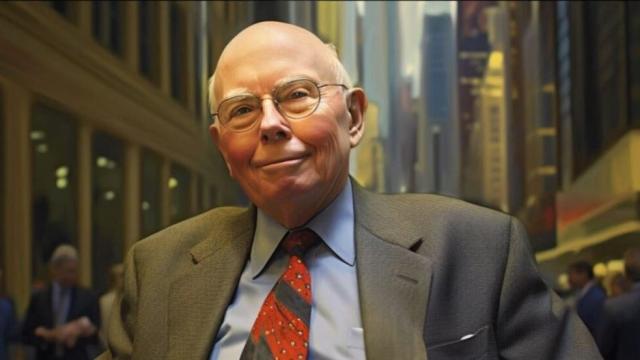
Charlie Munger is not just an investor; he’s a profound thinker whose sharp wit and robust investment philosophy have profoundly shaped the investment landscape. Best known as Warren Buffett’s right-hand man at Berkshire Hathaway, Munger’s approach—emphasizing the importance of mental models and a multidisciplinary framework—has made him a legendary figure in the investing world.
Brief Bio of Charlie Munger
Born on January 1, 1924, in Omaha, Nebraska, Charles Thomas Munger is a revered investor, businessman, and philanthropist. He studied mathematics at the University of Michigan before attending Harvard Law School, where he graduated magna cum laude with a J.D. Munger’s professional life spans law, real estate, and investments, culminating in his role as vice chairman of Berkshire Hathaway, where he has served since 1978. Charlie died November 28, 2023.
Charlie Munger completed his undergraduate studies at the University of Michigan and later graduated from Harvard Law School with a Juris Doctor degree.
Munger’s investment career began in earnest when he founded and managed the investment partnership Wheeler, Munger, and Company from 1962 to 1975, achieving substantial returns. His partnership with Warren Buffett at Berkshire Hathaway has been marked by significant acquisitions and investments that reflect a deep commitment to value investing.
Charlie Munger is well-known for his deep association with Warren Buffett and Berkshire Hathaway, bringing to the table a unique investment philosophy that has significantly influenced modern investment thinking. Munger’s strategies, while intertwined with Buffett’s, showcase his distinct approach to investing. Here’s a closer look at his investment strategies, risk management practices, and adaptability:
- Value Investing: At the core, Munger is a value investor who seeks to buy securities at prices significantly below their intrinsic value. He focuses on companies that have understandable business models, a durable competitive advantage, and competent management.
- Quality over Quantity: Unlike some investors who diversify broadly, Munger prefers a concentrated portfolio. He believes in the philosophy of “putting all your eggs in one basket and watching that basket closely,” implying a deep understanding and confidence in the few investments he makes.
- Long-Term Hold: Munger advocates for a long-term investment horizon. He believes that the best returns are achieved by holding onto investments for extended periods, allowing the companies to grow and compound their successes.
Risk Management Practices
- Intrinsic Value and Margin of Safety: Munger emphasizes the concept of “margin of safety”, which involves buying securities when there is a substantial difference between the price and the intrinsic value. This gap provides a buffer that helps protect against downside risks.
- Avoiding Leverage: Munger warns against the use of significant leverage. He believes that while leverage can amplify gains, it also increases the potential for catastrophic losses, particularly during market downturns.
- Circle of Competence: Munger, along with Buffett, often stresses the importance of operating within one’s circle of competence. By investing in businesses that they thoroughly understand, they minimize the risk of surprises related to business fundamentals.
Adaptation to Changing Market Conditions
- Economic Moats: Munger looks for companies with strong economic moats (a term he helped popularize). These are competitive advantages that are sustainable and protect the company from the erosive effects of competition, which is crucial in changing market environments.
- Skeptical of Market Trends: Munger is known for his skepticism regarding market trends and fads. His strategy involves sticking to the fundamentals of investing rather than getting swayed by market euphoria or panic.
- Learning and Adapting: While Munger has a set of core principles, he is also open to learning and adapting. He has incorporated ideas from various disciplines into his investment philosophy, such as psychology, to better understand market behavior and biases.
- Instrumental in guiding Berkshire Hathaway’s investment strategy, leading to multibillion-dollar investments in companies like Coca-Cola, Apple, and See’s Candies.
- Known for his philanthropic efforts, Munger has donated millions to universities and schools, promoting physics and the liberal arts.
Munger is an avid reader and thinker, known for his quick wit and often acerbic commentary on investment trends and economics. He believes in the value of multi-disciplinary learning and has a keen interest in physics, biology, and psychology.
Munger’s investment philosophy can be summarized as rigorous discipline, patience, and a strong ethical compass. He believes in the value of lifelong learning and has a profound respect for the laws of economics and business.
Charlie Munger’s impact on the world of investing is immense. His emphasis on mental models and a multidisciplinary approach to investment has influenced countless investors. His speeches and talks are often quoted for wisdom and insight into the nature of business and investing.
- “The big money is not in the buying and the selling, but in the waiting.”
- “I think I’m better at determining what’s worse than most other people, and I’m better at avoiding the bad ideas longer than most other people.”
- “If you keep learning all the time, you have a huge advantage.”
Charlie Munger, the longtime partner of Warren Buffett at Berkshire Hathaway, is highly respected for his wisdom and investment philosophy. While he hasn’t authored many books himself, his thoughts and philosophies are well-documented in a few key publications. Here are some essential books by and about Charlie Munger that you can explore:
- “Poor Charlie’s Almanack: The Wit and Wisdom of Charles T. Munger” – Edited by Peter D. Kaufman, this book compiles Munger’s speeches, essays, and wisdom into a comprehensive guide. It’s often regarded as the definitive collection of Munger’s thoughts on investing, business, and life philosophies. It includes his famous talks on the psychology of human misjudgment, which is a foundational piece on cognitive biases and rational thinking.
- “Seeking Wisdom: From Darwin to Munger” by Peter Bevelin – This book delves deeply into the decision-making processes and thought systems that have guided Munger and others like him. It explores the mental models that Munger often references, making it a crucial read for those interested in cognitive and behavioral psychology as it applies to investing and decision-making.
- “Charlie Munger: The Complete Investor” by Tren Griffin – This book is a compilation of Munger’s investment strategies and philosophies. Griffin does a great job of distilling Munger’s approach into understandable concepts, including his emphasis on “moats,” mental models, and the importance of character in investment decisions.
- “Damn Right: Behind the Scenes with Berkshire Hathaway Billionaire Charlie Munger” by Janet Lowe – This biography provides insight into Munger’s life, his partnership with Warren Buffett, and his influence on Berkshire Hathaway. It provides a detailed look at both his professional and personal life, offering lessons on investing, business, and the values he espouses.
These books provide not just a look into Charlie Munger’s investment strategies but also his broader thinking, making them valuable for anyone interest
Interview with Charlie Munger:
Note: All information sourced from public domain websites on a best efforts basis. For any corrections, additions, or to request this profile be removed please contact [[email protected]](mailto:[email protected]).
This article provides a comprehensive look at Charlie Munger’s investment strategy, his philosophies, and the profound impact he has had on the financial world.
Discover the 10 most important lessons from 18 years of profitable trading & reading over 150 trading books.
Get your FREE Report & 10 Training Videos NOW!
Source link