The Nordics: A pioneering region of FX digitalisation and innovation – e-Forex
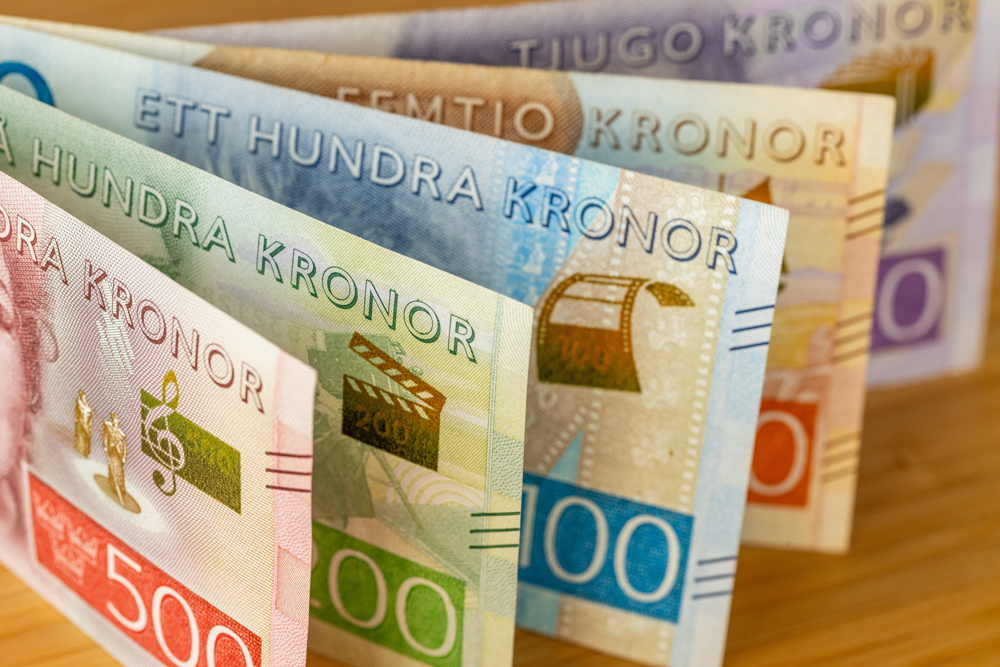





Although Scandinavian currencies are part of the G10, their trading behaviour often resembles that of emerging market currencies more than G7 majors. They are highly flow driven and even medium-sized transactions can significantly impact exchange rates.
Seasonality also plays a role, as corporate flows dominate liquidity in Scandi pairs. This is particularly evident in the Swedish krona, where patterns often mirror the predictability of large exporters.
Historically, market-making in these currencies has been concentrated among a handful of Nordic banks. While international banks participate by streaming prices, local players, especially SEB, benefit from a unique franchise deeply rooted in Sweden’s corporate landscape. This position provides access to uncorrelated flows across retail, payments, corporates of all sizes and institutions, enabling the pricing consistency for which SEB is renowned.
Liquidity in Scandinavian currencies is also highly concentrated during European trading hours, reflecting the activity of local clients explains Carolina Trujillo, head of international FX sales and e-distribution at SEB.
Local franchise key to success
“It is even possible to observe a dip during lunchtime, underscoring the importance of the local franchise and client community,” she says. “These currencies remain attractive to international players and hedge funds, not only for their distinctive characteristics but also because of Sweden’s strong fiscal position, which adds to their appeal.”
This observation is supported by the bank’s most recent Swedish macroeconomic forecast, which notes that the recovery in household consumption and GDP is finally picking up with the latter expected to grow by almost 3% in 2026 and 2027.
Household consumption is expected to rise by a similar percentage in both 2026 and 2027, supported by rising real wages, pent-up consumption needs and reduced taxes. Real disposable income is expected to increase by an average of 2.5% during 2025–2027 and the saving ratio has risen to record highs.
Unemployment continues to rise, although the upturn is showing some signs of levelling out. Labour market indicators have only marginally improved and SEB does not expect unemployment to start falling until the spring.
The National Institute of Economic Research’s indicator of labour shortages in the business sector continued to decline in the third quarter of 2024. Wage increases are expected to slow down from 3.7% in 2024 to 3.2% in 2027.
The next round of wage negotiations will take place in the spring of 2027, a period when inflation is expected to be below the 2% target. Indirect taxes will reduce inflation by almost one percentage point in 2026, mainly due to lower VAT on food.
Moderate wage growth, subdued international prices and a stronger Swedish krona indicate that inflation will remain below the target in both 2026 and 2027, also adjusted for lower indirect taxes.
Expansionary fiscal policy, increased defence spending and support for Ukraine are expected to lead to a significant rise in government borrowing in the coming years.
Customer relationships ease platform transition
“In a highly complex and fragmented e-FX landscape, our strong relationships with core clients position us as a trusted partner during the critical process of transitioning to new platforms,” says Trujillo. “Leveraging our deep expertise and close ties with all major platforms, we maintain a clear understanding of which multibank portals best align with specific client needs. Additionally, we have valuable insight into each platform’s service quality, both from a technical perspective and in terms of client relationship management.”
Clients rely on SEB’s expertise not only to navigate the e-FX venue landscape but also to evaluate the full spectrum of execution options available. Nordic buy-side firms vary in their level of adoption of electronic execution alternatives, ranging from those just beginning their digital journey to highly advanced players. The latter have significantly enhanced their e-FX capabilities, driven by internal policy requirements and external regulatory pressures.
“We foster open and transparent discussions with clients to strike the right balance between achieving competitive pricing and recognising that trading is part of a long-term business relationship,” adds Trujillo. “This understanding is well established among our core clients and enables deeper conversations about how to deliver the best possible outcomes for them in the long run.”
“For Scandies, depth is both limited and fragmented, making smooth execution highly dependent on internalisation within the franchise before exposing flow externally.”
Filippa Bång
On the subject of demand for algorithmic FX trading across the Nordics and the strategies and toolsets that are proving popular with users, Filippa Bång, head of algo distribution at SEB refers to a steady increase in algorithmic trading volumes, driven by greater transparency and access to distinctive liquidity sources.
“Successful execution requires balancing fill certainty against market footprint, leveraging opportunistic algorithms that dynamically adjust participation and timing based on real liquidity conditions in Scandies,” she explains.
“In Nordic FX markets, managing market impact is primarily a function of liquidity access. For Scandies, depth is both limited and fragmented, making smooth execution highly dependent on internalisation within the franchise before exposing flow externally.”
Four case examples of how SEB works with FX automation:
Share Class Hedging + Currency Overlay
A fund management client wanted to hedge the FX risk in their equity and bond portfolios. They also wanted to create share classes of some of their funds in different currencies and automatically hedge the embedded FX risk. SEB offered them a fully automated, cloud-based solution that calculates the required hedges, executes the trades and delivers the relevant benchmark and execution reports. In addition to saving the client a lot of manual work, SEB’s solution will also protect them against market and operational risk.
Process Automation
SEB is working with a global manufacturing company to optimize their internal processes in relation to liquidity and FX risk management . The objectives of this exercise is to help the company identify their biggest challenges, articulate their dream scenario and identify the technologies and processes required to implement their goals. A manual workflow carries with it both market and operational risk and SEB wants to help mitigate those risks.
Integration Through APIs
A global commodity trader uses Trading station to manually book the FX for their trades. It’s usually 2-3 FX bookings per commodity trade. By connecting their business system to SEB’s rest-API’s, the FX part of their trade is fully digital. This takes away both manual work, operational risk and the need to setup user accounts for all their traders.
Automated end-of-day overnight swaps
A Swedish bank and fund company sends their underlying FX Spot trades through a multi-bank platform and cleans up their SEB cash pools end-of-day with a manual overnight swap against SEK. By using SEB’s service Schedule FX this can be automated, which means no more repetitive manual tasks.
Leading the way in modernisation
The Nordic region has long been recognised as a pioneer in digitalisation and innovative ways of working. Today, the ongoing harmonisation of payment market infrastructure, encompassing the Swedish payment system and improvements in settlement cycle efficiency, marks a significant step toward delivering better services to clients.
These changes are long overdue and the current acceleration is creating a dynamic ecosystem that benefits established banks and payment companies while attracting a surge of new entrants in recent years.
In September 2025, SEB joined a consortium to launch a Micar-compliant, euro-denominated stablecoin. This digital payment instrument, leveraging blockchain technology, aims to become a trusted European payment standard in the digital ecosystem.
The stablecoin will provide near-instant, low-cost payments and settlements. The aim is to enable 24/7 access to efficient cross-border payments, programmable payments and improvements in supply chain management and digital asset settlements.
“In a highly complex and fragmented e-FX landscape, our strong relationships with core clients position us as a trusted partner during the critical process of transitioning to new platforms.”
Carolina Trujillo
The stablecoin will be regulated by the EU’s Markets in Crypto-Assets Regulation (Micar) and is expected to be first issued in the second half of 2026.
The initiative will provide a European alternative to the US-dominated stablecoin market, contributing to Europe’s strategic autonomy in payments. Individual banks will be able to provide value added services, such as a stablecoin wallet and custody. For SEB, the primary objective is to be able to use stablecoin by the first quarter of 2027.
With clearer regulations and more advanced technology, there is now a distinction between general technology, speculative digital currencies and regulated stable digital currencies such as stablecoins.
“This collaboration aims to unlock faster, more efficient payment solutions, ultimately simplifying and enhancing the customer experience,” notes Trujillo. “Fintechs play a critical role in this transformation by targeting specific pain points and delivering frictionless solutions that add real value.”
“We foster open and transparent discussions with clients to strike the right balance between achieving competitive pricing and recognising that trading is part of a long-term business relationship,”
Fintechs playing a key role
From a banking perspective, while SEB drives numerous initiatives internally, it also recognises the importance of partnering with fintechs, whether to accelerate delivery or complement its offerings.
SEB hosts its annual Fintech Days each fall. This recurring event brings together Nordic fintechs to showcase their companies and innovations to professional investors. In addition, the bank actively collaborates with Nordic and international fintechs in areas such as FX.
“Payments remain a central yet highly complex domain, largely due to fragmented solutions and the multitude of choices clients face,” says Trujillo. “The future should be seamless, instantaneous, harmonised and simplified. Achieving this vision will require a combination of forces, banks, fintechs and new players, working together to create a truly integrated and efficient payment landscape.”
As for the potential for further electronification of FX trading in the Nordics and where this will be focused, FX swaps remains an area where electronification will continue to advance. While the client-facing side is already highly automated, the real opportunity lies in the hedging space where further digitisation can deliver significant efficiency gains.
SEB’s commitment to innovation is evident through its investment in Sferical AI, a collaboration between AstraZeneca, Ericsson, Saab, SEB and the Wallenberg Investment Group. This initiative will operate a sovereign AI supercomputer designed to prepare Sweden’s leading industries for the age of AI.
“The project underscores SEB’s ambition in AI and we have a strong momentum for new and existing use cases within FX,” concludes Trujillo. “These range from optimising hedging strategies to dynamic, client-specific pricing in e-FX and extend further with the use of large language models to surface the most relevant insights for trading, sales and other functions.”
By introducing an unbiased perspective into data analysis, AI enhances decision making and highlights areas that require attention across the business – delivering tangible benefits and driving smarter, faster outcomes.
DIGITAL ASSETS & E-TRADING EVOLUTION
Across the Nordic region (and increasingly globally) buy-side firms have moved beyond the question of whether they need electronic execution. The baseline is already established in terms of reliable connectivity, consistent liquidity across majors and local currencies and transparent, auditable pricing. What has changed materially is how these capabilities are consumed and what sits around them.
That is the view of Søren Bjerregaard, sales director at GCEX, who says buy-side firms now expect FX and digital asset trading to be fully embedded into their existing treasury, risk and portfolio systems rather than operating as standalone front ends.
“Flexible APIs are no longer a differentiator, they are a requirement,” he adds. “This is particularly true as firms manage increasingly complex, multi-asset portfolios across different time zones. Alongside this, we are seeing a clear and sustained increase in demand for crypto-related products, especially from institutional and professional clients operating under regulated frameworks such as MiCA.”
“Not everything can be automated or put into a platform, so having a knowledgeable team to back up your technology offering is certainly still a key differentiator.”
Søren Bjerregaard
Clients demanding on digital access
These clients are not looking for speculative tools; they are looking for infrastructure that allows them to access digital assets with the same controls, governance and reporting standards they apply to FX and other asset classes.
From a functionality perspective, several themes consistently emerge:
Pre- and post-trade transparency, including reporting that supports best-execution analysis, regulatory obligations and internal governance
Liquidity aggregation and intelligent routing, allowing firms to manage market impact and execution quality across venues
Real-time risk and limit controls, particularly for central dealing desks and portfolio managers
Operational continuity across extended trading hours, reflecting the reality that markets (especially digital assets) now operate on a near-24/7 basis
“Crucially, clients no longer accept a one-size-fits-all platform model,” says Bjerregaard. “Buy-side firms differ significantly in how they trade, hedge, report and manage risk. They want solutions that can be tailored to their workflows, not forced into a rigid structure. This is where our role as a prime of prime becomes central. In a market moving towards greater regulation, broader asset coverage and continuous trading hours, flexibility and robustness are no longer optional.”
On the question of how much demand there is for algorithmic FX trading across the Nordics, he observes that while it remains strong and continues to grow, the motivation has shifted. For banks, asset managers, pension funds and active corporates, algos are now a standard tool for hedging programmes and larger, benchmarked flows.
“What is accelerating adoption is pressure on liquidity and execution quality,” suggests Bjerregaard. “Fragmented liquidity, tighter LP margins and the increasing use of AI by liquidity providers to analyse flow and manage risk mean that execution outcomes depend heavily on how orders are worked. As a result, more flow is moving towards rule-based, low touch execution, automated routing and algo selection frameworks.”
For smaller institutions and corporates, uptake is more selective. These clients want access to institutional grade algos via banks or prime brokers, combined with clear reporting and advisory support, rather than running complex models themselves.
“We see clients using algos less as a trading advantage and more as a governance tool to demonstrate process, measure outcomes and manage FX as a financial risk in an increasingly AI-driven market,” says Bjerregaard.
Electronic trading makes its mark
One of the most significant developments in the FX market in recent years has been the increasing electronification of trading and the Nordics is no exception. Indeed, the region is consistently referred to as an early adopter of electronic FX and automation, with electronification now viewed as the standard rather than an innovation.
That said, the process is far from finished according to GCEX founder & CEO, Lars Holst, who notes that the focus is moving beyond trade execution towards genuine end-to-end automation and integration of AI and 24/7 trading, linking ERP, treasury, risk limits and execution so that a significant proportion of flow is generated and processed automatically; extending automation into confirmation, settlement, collateral and reporting rather than concentrating solely on price-taking; and bringing FX futures and other listed instruments into the same electronic toolkit as OTC markets, supported by integrated risk and margin analytics.
“We know that Nordic institutions are cautious, but once there is regulatory clarity and a strong control framework they tend to move quickly,” he adds.
When asked which areas of FX-related financial technology are receiving the greatest level of investment, Holst observes that this investment is increasingly shaped by regulation, transparency and client sophistication, rather than by headline innovation alone.
“We know that Nordic institutions are cautious, but once there is regulatory clarity and a strong control framework they tend to move quickly.”
Lars Holst
“The most significant capital is flowing into data, analytics and execution intelligence,” he explains. “As more firms develop their own transaction cost analysis (TCA) frameworks, the expectation is no longer simply to provide execution, but to provide data that can withstand scrutiny. High quality market data, granular execution metrics and audit-ready reporting are now essential not just for MiFID II obligations, but for internal governance and client oversight. In many respects, analytics have become a core control function.”
Closely linked to this is ongoing investment in system optimisation and low touch execution infrastructure. The focus has moved beyond building algorithms to ensuring the entire execution environment is resilient, observable and adaptable. This includes smart order routing, broader liquidity connectivity, pre- and post-trade controls and the ability to monitor and adjust execution behaviour dynamically as market conditions change.
AI enabling more efficient trading
Holst acknowledges that AI and cloud infrastructure are also receiving sustained investment, but primarily as enablers rather than ends in themselves. “AI is being applied to pattern recognition, flow analysis, pricing behaviour and execution diagnostics, while cloud technology provides the scale needed to process growing data volumes and support near-continuous trading environments,” he says.
Underpinning all of this is a clear shift in client expectations. Buy-side firms want technology providers that are agile, that understand their specific workflows and that can adapt systems as their execution models evolve. One-size-fits-all platforms are increasingly challenged by clients who know precisely what they need and who have the data to validate it. “The objective is to give clients the tools, transparency and flexibility they need to operate confidently in a market where regulation is tighter, data is richer and expectations are higher,” says Holst, who adds that as clients become accustomed to instant and transparent domestic transactions, they naturally expect the same clarity and efficiency when managing their currency exposures.
“This shift in expectations is already influencing how institutions think about FX execution, use of stablecoins, liquidity access and digital asset infrastructure across the region,” he concludes.
Source link