Weaker Dollar to Start final Week of January – Currency Thoughts
Weaker Dollar to Start final Week of January
January 26, 2026
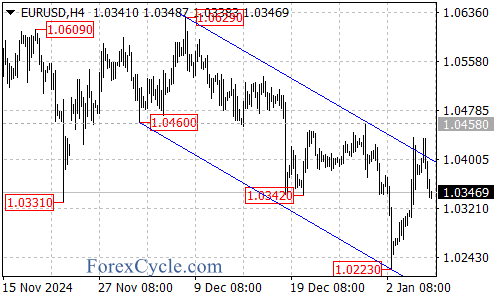
Ahead of a possible U.S. government shutdown at the end of this month and on the heels of another killed civilian in Minneapolis, the dollar by early afternoon in NY had depreciated 1.2% against the yen, 0.8% versus the Swiss franc, South Korean won and kiwi and 0.5% relative to the euro and sterling. The weighted DXY dollar index lost 0.6% and is roughly 11% below its year-earlier value. With the dollar sliding, it does not appear that Japanese officials have yet needed to support their currency with forex intervention.
U.S. equities, in contrast to the dollar, have outperformed most other stock markets with gains so far of 0.6-0.7% in the DJIA, SPX and Nasdaq indices. Japan’s Nikkei, South Korea’s Kospi and India’s Sensex fell 1.8%, 0.8% and 0.9% this Monday, and the British, German, Australian and Hong Kong markets edged only 0.1% higher.
Partly in relief from Trump’s canceled threat to raise tariffs against Europe, ten-year sovereign debt yields feel by six basis points in France, five bps in Italy, four bps in Spain and Germany and two bps in the United States, Great Britain and Japan.
Gold‘s price is 2.1% above last Friday’s closing level, and Bitcoin has rebounded 1.7%. Oil, by contrast, has slid back 0.8%.
Markets were looking for the National Bank of Pakistan to implement a ninth interest rate cut since June 2024, but monetary authorities instead left such steady at 10.5%. For the prior year from June 2023, the rate had been held at 22.0%. Pakistani CPI inflation fell from 38% in May 2023 to 0.3% in April 2025 versus at target range of 5-7%, and is current in that corridor at 5.6%.
U.S. durable goods orders rebounded more sharply than predicted in November with a 5.3% monthly advance. Over the first 11 months of 2025, durables exceeded their year earlier level by a robust 7.3%. The Chicago Fed National Activity Index improved to a 4-month high in November, while the Dallas Fed manufacturing survey measure this month climbed to a 6-month high.
The Munich-based IFO Institute monthly German business climate index for January matched December’s 7-month low of 87.6. There was a marginal uptick in current conditions, but expectations recorded an 8-month low. Readings improved in manufacturing, trade and construction, but services fell to a 4-month low.
India’s index of leading economic indicators suffered a 0.1% drop in December, while its index of coincident economic indicators rose another 0.5%.
Japan’s indices of leading and coincident economic indicators in November were each revised lower. The LEI still was still at an 18-month high, while the CEI reversed October’s full point rise.
Brazil’s current account deficit in 2025 amounted to $68.8 billion, barely changed from $66.2 billion in 2024 and equal to 3.0% of GDP.
Copyright 2026, Larry Greenberg. All rights reserved.
Tags: German business climate index, National Bank of Pakistan, U.S. durable goods orders


 ShareThis
You can leave a response, or trackback from your own site.