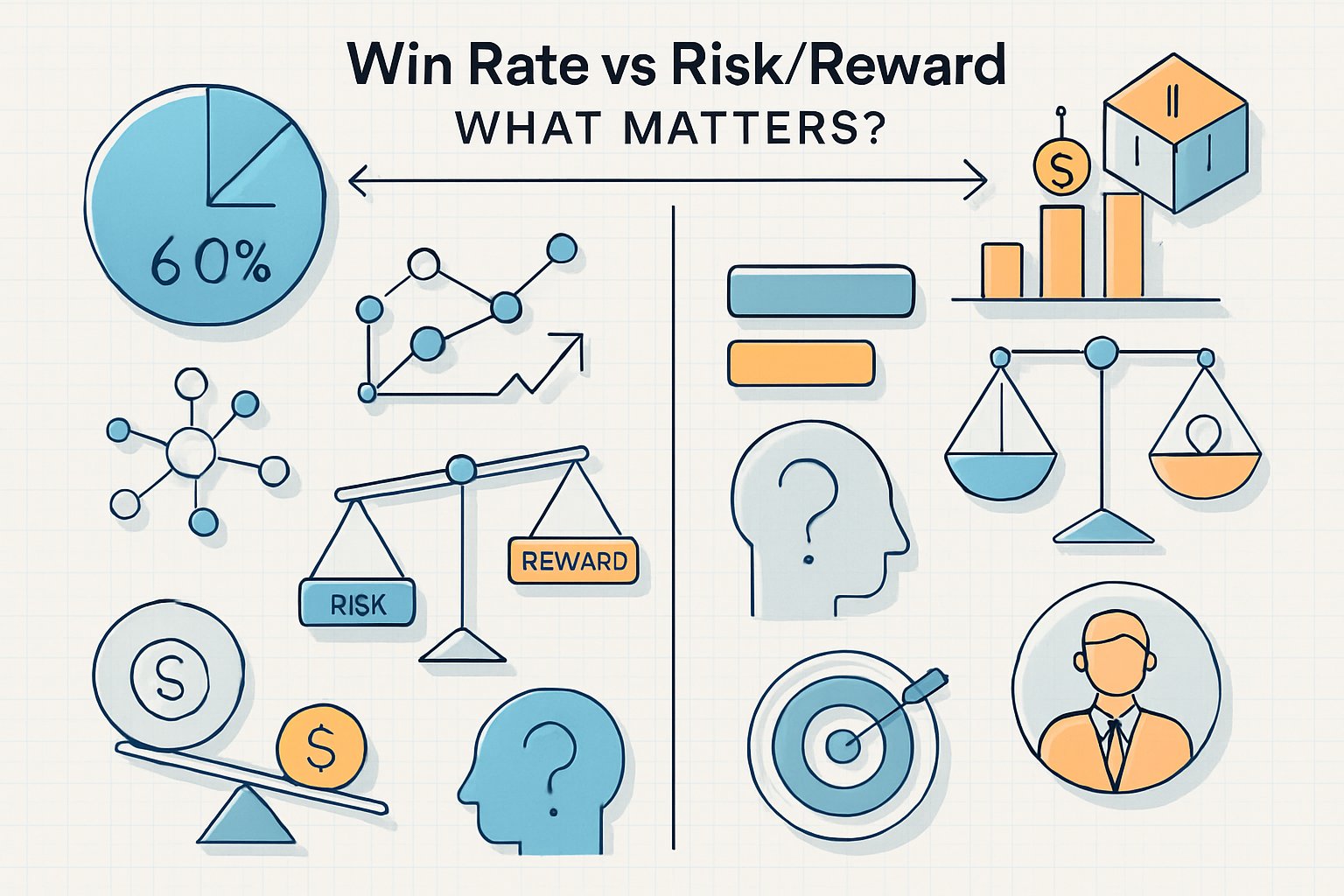
Win Rate vs Risk/Reward Guide for Day & Swing Traders
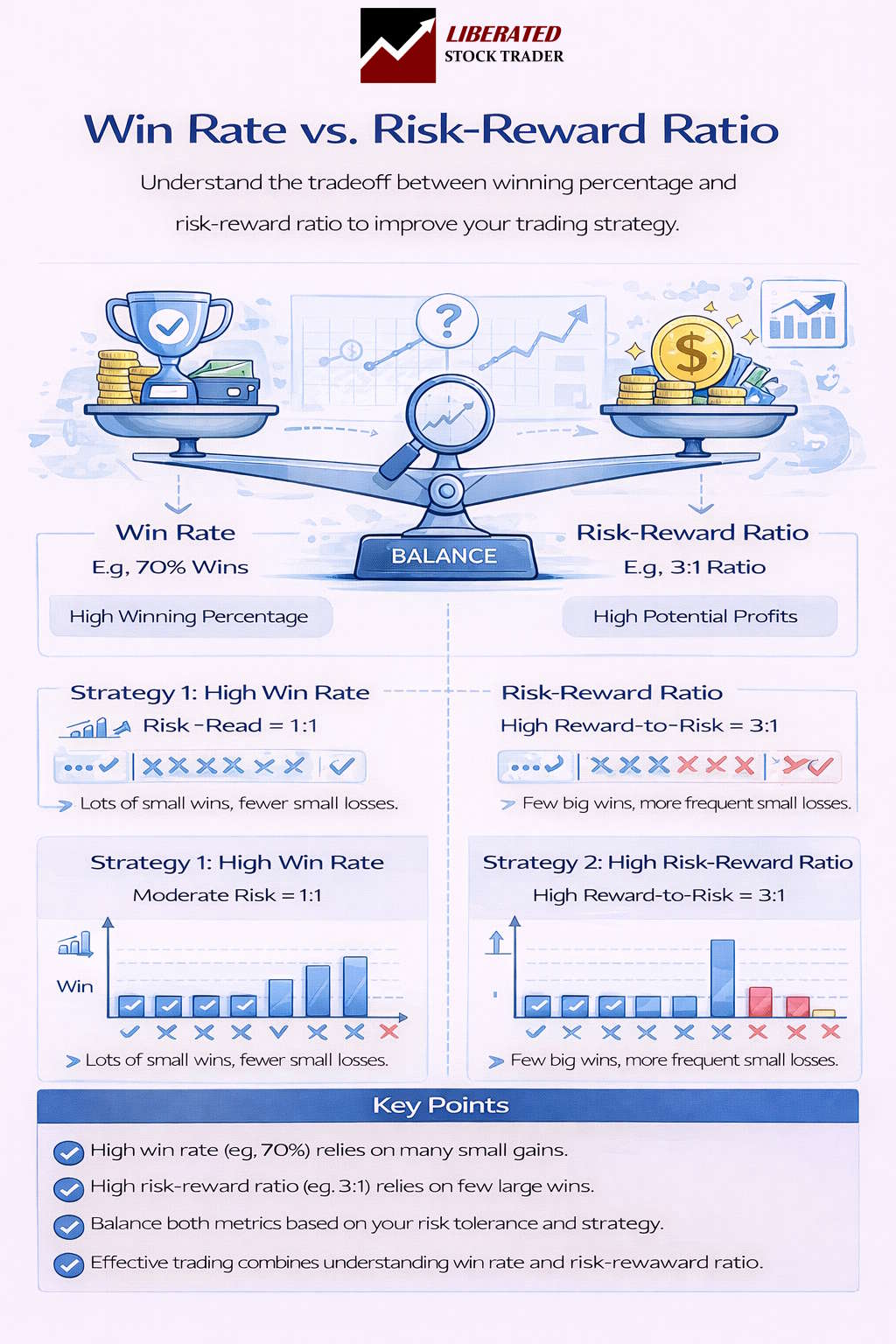
You’re always faced with the choice: do you want to win often, or win big? Every trade pushes you to pick between the comfort of frequent small wins and the patience it takes to land those larger, less common profits.
Getting a grip on how win rate and risk/reward ratio affect your results helps you figure out which path actually fits your style and risk comfort.
You’ll see how these two metrics play off each other, where each one shines, and what benchmarks most traders actually use to keep their edge. Figuring out which metric deserves your focus can really sharpen your discipline.
1. Win Rate
Win rate tracks how often your trades actually make money. Just take the number of winning trades, divide by your total trades, and multiply by 100.
The percentage of trades won out of total trades taken.
Say you win 55 out of 100 trades—your win rate is 55%. Simple enough.
Winning more often feels great, but it doesn’t always mean you’re making money. If your average loss is bigger than your average win, you can still end up in the red.
Plenty of experienced traders stay profitable with win rates between 40% and 60%, depending on how they set up their risk/reward.
Here’s a quick table for reference:
| Total Trades | Winning Trades | Win Rate (%) |
|---|---|---|
| 100 | 60 | 60% |
| 50 | 25 | 50% |
| 200 | 90 | 45% |
Win rate only tells part of the story. Pair it with average profit per trade and your risk/reward ratio to get a clearer picture.
A 70% win rate looks impressive, but if your losses are twice as big as your wins, the math just doesn’t work out.
Try to keep your win rate steady over time. It’s better to review monthly or quarterly rather than obsess over every single trade.
That way, you’ll spot issues in your strategy or execution before small problems become big ones.
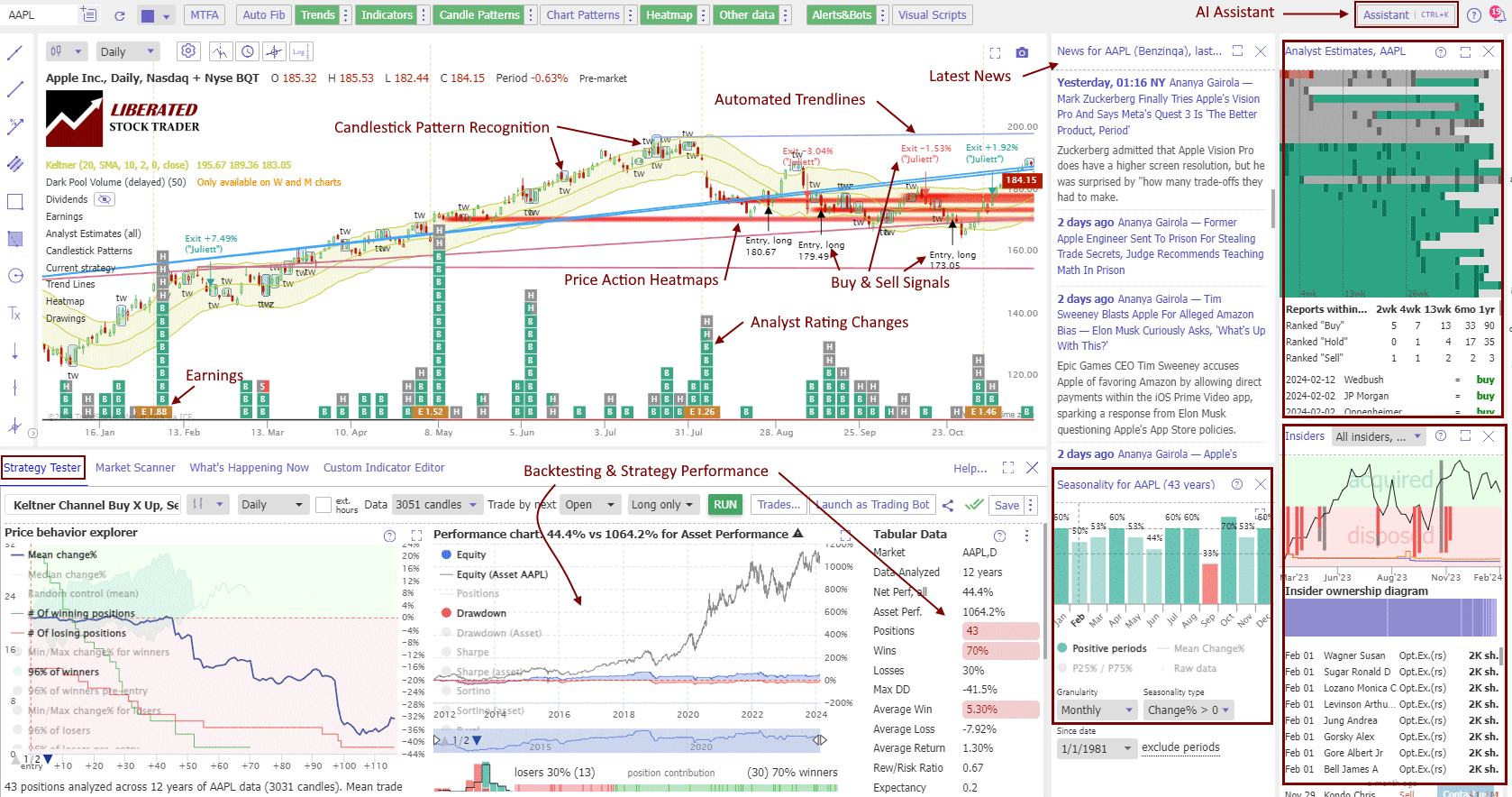
How do you assess the Win Rate & Risk/Reward for a trading strategy? You use a professional backtesting system. TrendSpider (below) wins our backtesting benchmarks.
2. Risk/Reward Ratio
The risk/reward ratio looks at how much you stand to gain compared to what you could lose on a single trade. It’s your gut check—does the potential reward actually make the risk worth it?
The ratio comparing potential profit to potential loss per trade.
Divide your expected profit by your possible loss. If you risk $100 to make $300, you’ve got a 1:3 ratio.
Traders use this to set stop-loss and take-profit points. A steady ratio helps you judge if a trade is even worth taking.
Many folks aim for 1:2 or 1:3 to keep losses smaller than wins, but the “right” ratio really depends on your approach and the market.
With tools like TrendSpider, you can plot entry, stop, and target levels right on your charts. That makes it easier to check if a setup meets your risk/reward standards before you click buy.
Just because a ratio is high doesn’t mean you’ll profit. A 1:4 setup is pointless if you only win 10% of the time.
You need to balance both—risk/reward and win rate—to see if your plan actually works.
Use the ratio as a filter. If the reward isn’t worth the risk, just skip the trade.
3. High Win Rate Strategy
If you’re after most trades ending in the green, even if profits are modest, you’re in high win rate territory. You’ll focus on accuracy and repeatability, not home runs.
Suits traders seeking frequent small wins with tight risk controls.
This style fits anyone who likes steady results and gets stressed by long losing streaks.
You’ll probably trade setups with clear rules for entry and exit, like short-term pullbacks or range reversals. Tight stops and modest targets are your bread and butter.
You’ll protect your capital by getting out quickly when a trade turns sour.
Since every win is small, you have to manage risk carefully. Position sizing matters, and overleveraging is a fast way to blow up.
A couple of big losses can wipe out weeks of small wins. Many traders use automated alerts or bots on TrendSpider to stick to their stops and targets.
This style works well for scalpers, day traders, and anyone running algorithms who want precision and can follow rules.
You should track metrics like average win size, average loss size, and expectancy to ensure you’re actually making money.
Use TrendSpider to backtest your approach in different markets. Look for win rates of 60–80% with a reward-to-risk ratio close to 1:1.
If your accuracy is high but your risk control is sloppy, results won’t last. Balanced systems tend to survive different market cycles.
If you go this route, discipline and execution speed are everything. Your edge comes from repetition, not chasing big moves.
Keep records, review trades weekly, and tweak stop distances as volatility changes.
4. High Risk/Reward Strategy
A high-risk/high-reward approach lets you aim for big wins, knowing most trades might not work out. You might risk $1 to make $3 or more, so a few good trades can cover several losses.
Fits traders willing to accept more losses for bigger gains.
This style is for traders who can handle drawdowns without panicking or ditching their plan.
You’ll need a clear plan for entries, stops, and targets. Set your risk before you enter—usually just a small chunk of your total capital.
Consistent position sizing prevents a single bad trade from wiping out your progress.
You’ll find this works best in trending or volatile markets. Swing and position traders often use it to catch big moves rather than grab small, frequent wins.
For example, TrendSpiders’s Risk/Reward tool lets you see if a setup’s potential reward is really worth the risk.
A few typical features:
- Lower win rate: Maybe 30–50% of trades win.
- Higher reward: Usually 1:2, 1:3, or more.
- Longer holds: Trades can last days or weeks.
- Discipline required: Stick to stops and avoid revenge trading.
Track your numbers closely. Even with a low win rate, you can come out ahead if your winners are much bigger than your losers.
Check your trades monthly to see if your risk/reward assumptions hold up in live markets.
Pick this strategy if you like asymmetric payoffs and don’t mind sitting through losing streaks.
Start small, test first, and only size up after you see steady results.
5. Trade-off
You can lose more trades than you win and still end up ahead—as long as your average winner is much bigger than your average loser.
Low win rates can still be profitable with a high risk/reward ratio
That’s the core trade-off between win rate and risk/reward ratio. The real question: do your gains outweigh your losses over time?
Take a 1:3 risk/reward ratio. You risk $1 for a shot at $3. Even if you only win 30% of the time, you can be profitable, because your winners pay for your losers (and then some).
The math matters more than the win count.
Most traders test this balance using backtests or risk calculators.
Tweak your stops and targets to spot how small changes shift your results.
Here’s a quick comparison:
| Win Rate | Risk/Reward | Expected Profit per 10 Trades* |
|---|---|---|
| 70% | 1:1 | +4 units |
| 40% | 1:2 | +4 units |
| 25% | 1:4 | +5 units |
*Assumes equal position sizes and consistent execution.
If you’re okay with more losing trades and want bigger payoffs, go for higher risk/reward.
That works for swing or trend traders who hold positions longer and can handle drawdowns.
If you want frequent, smaller wins and tighter loss control, a lower risk/reward ratio is probably a better fit.
Test your approach before risking real money. Let the data—not your gut—decide if your risk/reward and win rate combo actually matches your goals.
6. Benchmark Win Rate
Your win rate shows how many of your trades close in profit. A 60–75% win rate usually means steady growth if you pair it with a reasonable risk/reward ratio.
Aim for 60–75% to maintain consistent profitability in most strategies
If you drop below that range, you’ll need to target higher reward-to-risk ratios to stay in the black.
A 60% win rate means 6 out of 10 trades win. If your average reward matches or beats your average loss, you’re in good shape.
Many short-term traders, especially day traders, shoot for this middle ground—it balances steady results with manageable drawdowns.
Win rates above 75% usually mean your profit targets are tighter, or your reward-to-risk ratio is lower. That can shrink your average profit and make you more vulnerable to slippage or fees.
If your win rate falls below 50%, you’ll need your winners to be at least twice as big as your losers to stay profitable.
| Strategy Type | Typical Win Rate | Typical Risk/Reward | Notes |
|---|---|---|---|
| Scalping | 70–80% | 1:1 or lower | Frequent trades, small gains |
| Swing Trading | 55–65% | 1.5–2:1 | Moderate frequency, balanced |
| Trend Following | 40–55% | 2–3:1 | Fewer wins, larger profits |
Use benchmarking tools to check your stats.
Track at least 50–100 trades before you start making big changes.
If your win rate drops below 60%, take a hard look at your stops and trade selection. If it’s above 75%, double-check that your average reward is worth it.
Focus on results you can repeat, not chasing perfect accuracy.
7. Benchmark Risk/Reward
A 1:2 risk/reward ratio means you’re aiming to make double what you risk on each trade. So if you risk $100, you’re targeting $200 in profit.
Target at least 1:2 ratio to offset losses effectively.
This structure gives you a shot at staying profitable even if only half your trades turn out to be profitable. At a 50% win rate, a 1:2 ratio covers costs and breaks you even—anything better, and you’ll see steady gains.
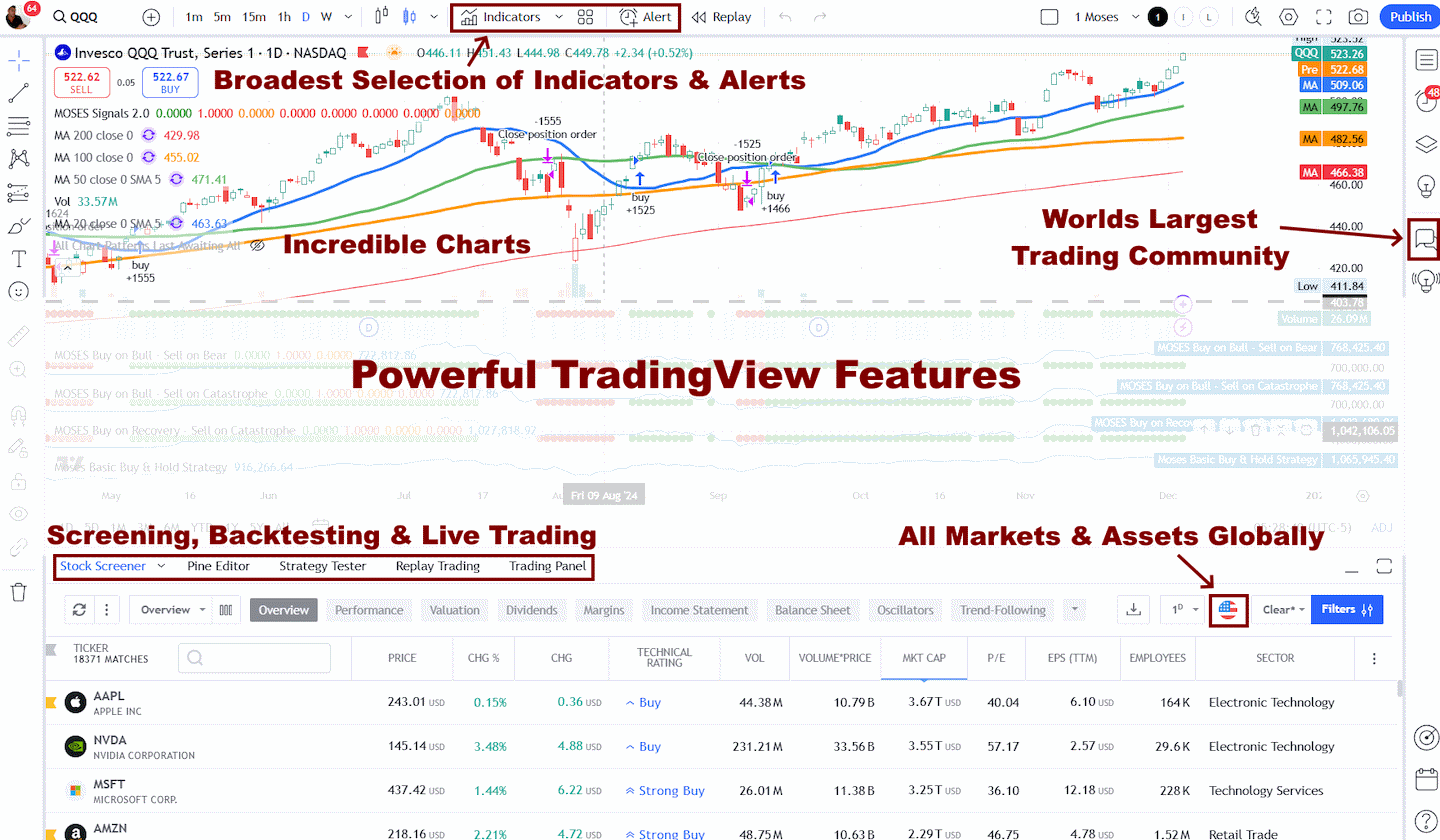
Traders who settle for lower ratios, like 1:1, need a much higher win rate just to stay ahead. If you want to test your setups, backtesting tools like TradingView let you simulate trades and see how different stop-loss and take-profit levels play out.
My thorough testing awarded TradingView a stellar 4.8 stars!
With powerful stock chart analysis, pattern recognition, screening, backtesting, and a 20+ million user community, it’s a game-changer for traders.
Whether you’re trading in the US or internationally, TradingView is my top pick for its unmatched features and ease of use.
Watching the numbers in action helps you tweak your benchmarks before you put real money on the line. Keep your ratio steady across trades—adjust position size or stop-loss distance to maintain balance between risk and reward.
This kind of discipline reduces emotional decisions and keeps your performance data apples-to-apples. When markets get wild, widen your stops and targets proportionally so you keep the ratio intact.
Don’t chase huge, unrealistic profits—instead, look for setups where a 1:2 target fits the price action and current volatility. Here’s a quick checklist:
- Risk no more than 1–2% of account equity per trade.
- Set take-profit at least twice that distance.
- Review results monthly to ensure your actual ratio matches your plan.
Use the 1:2 benchmark as a starting point, not a hard limit. If your strategy has a low win rate, you might need a 1:3 or better ratio. High-accuracy systems can sometimes get away with 1:1.
Test, track, and adjust based on your own numbers.
8. Who Should Choose Win Rate Focus?
If you’re new to trading, or you just like frequent proof that your strategy works, you’ll want to focus on win rate. A high win rate gives you fast feedback and helps you stick to your process.
beginners or scalpers needing steady confidence
It also builds trust in your system before you start handling bigger losses or more complex trades. Scalpers usually lean this way—they take lots of short trades and depend on consistency and small, repeated wins.
A high win rate helps them keep stress in check and stay sharp during quick sessions. Beginners benefit from tracking win rate because it makes performance measurement straightforward.
You can see progress through the percentage of winning trades. This metric helps you refine entries, exits, and timing before you add risk-reward tweaks.
But let’s be real—a high win rate alone doesn’t mean profits. If your losses are bigger than your wins, your account can still shrink.
You need to keep an eye on both metrics so you don’t get lulled into overconfidence by frequent but low-value wins. When you’re testing or adjusting a high-win-rate strategy, use tools like TrendSpider to break down short-term setups.
Automated charting and backtesting show how often your signals hit targets versus stops. This data lets you tweak stop distances and trade frequency for steadier results.
Go for a win rate focus if you want regular feedback, need to build confidence, and trade in fast-moving markets where small gains stack up. Keep risk per trade tight and check your results weekly to make sure your consistency actually leads to profit.
9. Who Should Choose Risk/Reward Focus
If you already manage bigger positions or trade over several days, it makes sense to focus on risk/reward. These setups usually need wider stop-losses and longer holds, so a high win rate isn’t as critical as making sure your winning trades are big enough to cover the losers.
Experienced traders managing larger positions or swing trades
Experienced traders usually fine-tune entries and exits based on market structure, volatility, and position sizing. They stick to a risk/reward ratio of at least 1:2 or higher to keep returns consistent, even if fewer trades win.
This approach helps preserve capital during rough patches and smooths out performance. Swing traders do well with this focus because they can let trades run while limiting the downside.
A 1:3 or 1:4 ratio works when you base targets on technical levels or multi-day trends. Tools like Trade Ideas & TrendSpider can automate chart analysis and spot setups with solid reward-to-risk profiles.
If you use leverage or trade across several instruments, focusing on risk/reward helps balance your exposure. You’ll calculate position size from what you’re willing to lose, not what you hope to gain.
That discipline keeps your account stable, even when things get choppy. Pick this focus if you have the patience and capital for longer trades and partial losses.
It fits traders who track metrics like average return per trade, drawdown percentage, and expectancy—not just win rate. Start by reviewing your past trades and tweaking targets until your average reward clearly beats your average risk.
10. Combine Both Metrics
You’ll get the most consistent trading results when you pay attention to both your win rate and your risk/reward ratio. Sure, a high win rate feels comfortable, but if your average reward is small compared to your risk, profits might not go anywhere.
Best results come from balancing a reasonable win rate with a favorable risk/reward
A strong risk/reward ratio can make up for a lower win rate, but only if you keep losses in check. Think of win rate as accuracy and risk/reward as efficiency.
When you strike a balance—like a 50% win rate with a 2:1 reward-to-risk ratio—you give yourself a setup that can handle normal market swings without needing perfect timing. Traders often map out these combos with a risk-reward win rate chart.
It shows how different ratios can create the same expected return. For example, a 30% win rate with a 3:1 ratio can match a 60% win rate with a 1:1 ratio, depending on trade size and consistency.
To put this into practice, track both metrics in your trading journal, to see how your stop-loss and take-profit levels affect your average reward-to-risk.
Adjust position size or entry timing if one metric drifts too far from your target. Here’s a simple checklist:
- Confirm the average win rate over at least 20 trades.
- Calculate the average reward-to-risk ratio.
- Compare both to your strategy’s expectancy goal.
- Adjust only one variable at a time—stop distance or target size.
When both numbers line up, you know which edge to keep and when your system starts slipping. That balance keeps your results steadier, no matter what the market throws at you.
Core Concepts: Win Rate and Risk/Reward Defined
Both win rate and risk/reward ratio measure trading performance from different angles. Win rate tracks how often you win, while risk/reward measures how much you gain versus what you risk.
Together, these metrics decide whether your strategy can stay profitable over time.
How Win Rate Is Calculated
Your win rate is the percentage of trades that end up profitable. To figure it out, divide your number of winning trades by total trades, then multiply by 100.
If you win 6 out of 10 trades, your win rate is 60%. Win rate by itself doesn’t guarantee profits.
A trader can win a lot but still lose money if the average loss is bigger than the average gain. Always compare the win rate with the average profit per trade to get the full story.
Benchmarks help set expectations. Many short-term traders shoot for 40–60%, while high-frequency or scalping strategies might hit 70% or more.
Swing or trend traders usually accept lower win rates if their average reward is higher. Trade Ideas can help you track and test win-rate data across different strategies in real time, so you can see which setups actually work in various markets.
Understanding Risk/Reward Ratio
The risk/reward ratio (R) shows how much you stand to lose versus what you could gain on a trade. You get it by dividing your expected profit by your possible loss.
If you risk $100 to make $300, your ratio is 1:3. A higher ratio means you pocket more per win than you lose per loss.
Many traders aim for at least 1:2 or 1:3, but the right number depends on your win rate and trading style. Use this ratio to set stop-loss and take-profit levels before you enter a trade.
It forces discipline and helps you decide if a setup offers enough upside for the risk. TrendSpider can automate these levels by mapping price swings and volatility zones right on your charts.
Common Misconceptions
Many traders think a high win rate guarantees profits, but that’s not true. You could have a 90% win rate and still lose money if your losers are way bigger than your winners.
Profitability depends on both how often you win and how much you win compared to your losses. Some also believe a high risk/reward ratio always improves results.
If the ratio is too high, you might get fewer trades or hit your stops more often. Balance matters more than extremes.
Another mix-up: planned versus realized ratios. Slippage, fees, and execution delays can eat into actual returns.
Track both planned and actual metrics to see whether your strategy actually performs.
Choosing the Right Metric for Your Trading Style
Your results depend on how you balance accuracy and payoff. A high win rate can bring steady gains, while a strong risk/reward ratio can make up for frequent small losses.
The best metric depends on your time frame, strategy, and appetite for drawdowns.
When Win Rate Matters Most
Focus on win rate if you trade a lot and want consistent, smaller profits. Scalpers and short-term day traders often depend on a high win rate to stay confident and keep their accounts growing.
A high win rate works best for strategies with tight stops and modest profit targets. If you close positions within minutes or hours, you might need a 70–80% win rate, even if each win is just a bit bigger than the risk.
Key traits of win rate–focused trading:
- Short holding periods
- High trade frequency
- Small position sizes
- Tight stop-loss control
Platforms like Trade Ideas help you test intraday setups and track your win percentage across strategies. Just remember, a high win rate loses value if your average loss is bigger than your average win.
When to Prioritize Risk/Reward
Put risk/reward first if your strategy accepts more losing trades in exchange for bigger winners. Swing traders and trend followers usually go this route because strong moves can deliver two to five times what you risk.
A risk/reward ratio above 2:1 can make a system profitable even with a win rate under 40%. This setup works for traders who want fewer but higher-impact trades.
It also helps protect your capital when markets get rocky.
Checklist for risk/reward–driven trading:
- Larger trade targets compared to risk
- Lower win frequency
- Wider stops with clear exit rules
- Patience for trade setups
Blending Both Approaches
Lots of traders blend both metrics to keep returns smoother and stress lower. You can run one strategy with a high win rate for stability and another with a high risk/reward ratio for growth.
This mix balances comfort with mathematical expectancy. Tracking both metrics gives you a clearer picture of performance.
A system with a 55% win rate and a 1.8:1 reward-to-risk ratio can outperform one with a 75% win rate at 1:1.
Practical steps:
- Log every trade’s outcome, risk, and reward.
- Calculate expectancy = (Win Rate × Avg Win) – (Loss Rate × Avg Loss).
- Adjust position sizing based on which metric gives you an edge.
Use TrendSpider to automate chart analysis and backtest both types of setups. Over time, you’ll see which combination fits your trading style best.
FAQs
Understanding how win rate and risk/reward ratio work together helps you manage both profit potential and loss exposure. The right balance really depends on your strategy, capital, and comfort with drawdowns.
How do you calculate the optimal risk-reward ratio for your trading strategy?
Divide your average profit per winning trade by your average loss per losing trade. If you make $300 on winners and lose $100 on losers, your ratio is 3:1.
Test different ratios in a backtest environment, such as TrendSpider, which can automate chart analysis and show how each setup would have performed historically.
What are the implications of a high win rate on your overall trading performance?
A high win rate usually means smaller profits per trade and tighter stops. You might feel more consistent, but a single big loss can wipe out many small wins if your risk/reward ratio isn’t solid.
Track both metrics together to make sure your high win rate actually leads to positive expectancy over time.
How does a 1-to-3 risk-reward ratio impact your trading outcomes compared to a 2-to-1 ratio?
A 1:3 ratio means you’re risking one unit to try for three, so you can actually lose more trades and still come out ahead.
With a 2:1 ratio, you’ll need to win more often, since your losses hit harder relative to your gains.
Try backtesting both setups—see which style fits your trading pace and the markets you’re watching.
What benchmarks indicate a good win rate in trading, and how do you measure it?
Swing traders often shoot for a 50–60% win rate. Scalpers sometimes push past 70% by aiming for smaller, quicker profits.
Just take your number of winning trades, divide by total trades, and multiply by 100 to get your win rate.
In what ways does the 2% rule affect your swing trading risk management?
The 2% rule says you never risk more than 2% of your account on a single trade. It’s a way to keep your account from blowing up during rough patches.
You’ll need to tweak your position size or stop-loss distance before you jump in, so you’re sticking to that 2% cap.
When should you prioritize win rate over risk-reward ratio
Go for win rate if you’re running a strategy built on frequent trades with small, steady gains—think day trading or mean-reversion setups.
If you’d rather make fewer trades and aim for bigger profits, focus on risk/reward instead. That’s pretty common with trend-following or breakout strategies. You can use Trade Ideas to test both styles and see which one aligns with your goals.
Source link