WA Fortress: A State that Can Feed, Fuel, and Finance Itself – Fat Tail Daily
As the energy crisis drags on, not all states sit on an even footing. In fact, Western Australia could be the place to be over the coming years.
You see, thanks to its geographical isolation, WA has gone ‘off-grid.’
Once seen as a hindrance, this could turn into a windfall if global supply chains continue to fragment.
For one thing, WA sits outside of Australia’s National Electricity Market.
In a rare example of government policy leading to a clearly positive outcome, the Western Australian government introduced a policy of holding back ‘some’ gas for domestic use.
That was introduced about 20 years ago, in 2006.
Simply put, WA’s LNG producers are required to reserve 15% of their production for the local market, enabling residents and businesses to enjoy significantly lower gas prices than the rest of the country.
Gas is cheap in WA, and I can say that from first-hand experience, having lived in the state for a number of years.
And thanks to its domestic energy focus, the divergence could become more stark in the months to come.
Natural gas is a crucial input for industrial, mining, and processing operations. It’s used to generate heat, steam, and electricity, supporting the state’s energy-intensive economy.
As a mining state, about 32% of WA’s annual domestic gas production is used in minerals processing, while another 23% is used in mining operations.
But gas is only one (but critical) part of the story for Western Australia.
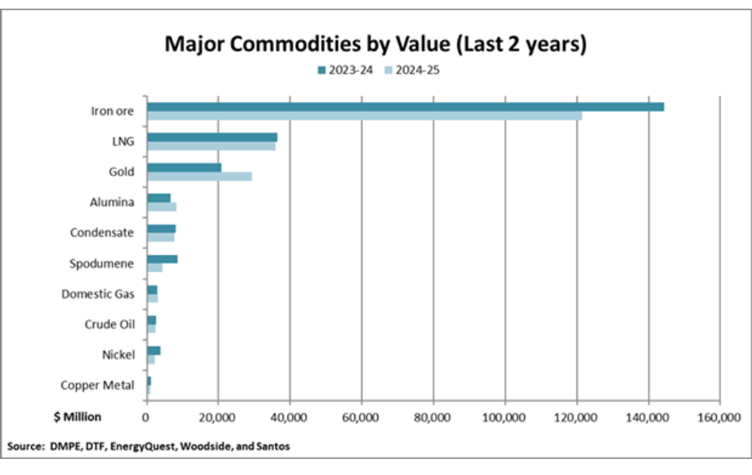
As you might be aware, WA is a powerhouse in the real-world economy, as you can see from its commodity mix below:
[Click to open in a new window]
Iron ore remains the behemoth fuelling the state’s coffers; however, gold and LNG are also rising as major contributors.
Given the geopolitical backdrop, these two commodities could feature prominently in the years ahead.
Spodumene, the raw form of lithium, could also become a major contributor if we see a rise in electric vehicle uptake on the back of sustained higher oil prices.
But then there are lesser-known drivers of WA’s economy, like its food security…
The state is close to opening one of the world’s largest urea production facilities. That’s set to kick-start next year in Karratha.
Urea is a critical fertiliser input, and global supplies are at significant risk, with around half of all seaborne shipments passing through the Strait of Hormuz.
In fact, Iran is one of the largest global suppliers.
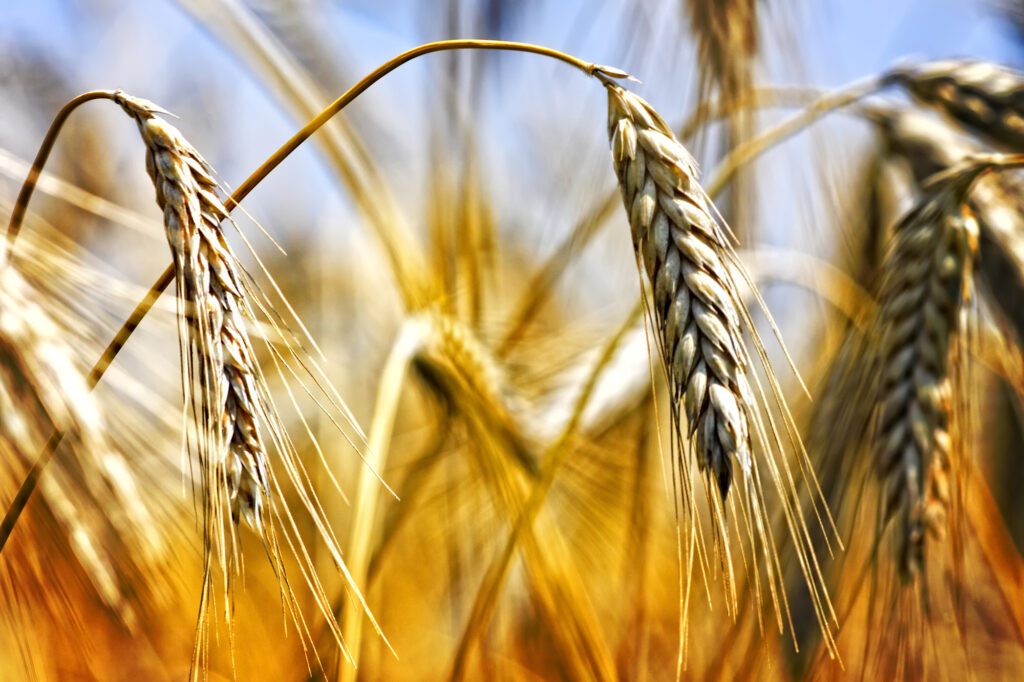
Meanwhile, WA produces about 40% of Australia’s wheat exports, most of which goes to Asia and the Middle East, giving it significant leverage in trade deals.
And thanks to its wide geographical breadth, it spans the full spectrum of growing conditions, from temperate and Mediterranean conditions in the South to subtropical conditions in the North.
That means WA can grow everything from temperate crops like potatoes and apples, to tropical fruits like mangoes and bananas!
There aren’t many economic regions that can make that claim.
But there is one kink in WA’s
powerhouse economy: diesel.
As I said, mining operations feed off the state’s vast gas reserves, powering energy-intensive mills and processing facilities.
According to government sources, 51% of the energy used by the WA mining sector comes from gas.
That’s something WA has plenty of.
But diesel is needed for the actual extraction of ore, from excavators to dump trucks to the haul trucks and trains that deliver product to port.
Now, Western Australia does produce substantial volumes of crude oil from its offshore basins along the Northwest Shelf; however, most of it is exported to Asia due to a lack of domestic refining capacity.
Fix that missing link, and WA could be on the way to becoming one of the most economically resilient regions on Earth.
And that could matter a lot more in the years ahead.
Western Australia’s isolation was once a liability. Now, with cheap and abundant gas, world-class commodities, and food security, isolation could be its greatest asset.
Until next time.