Beyond the Brand: How to Choose the Right Corporate Trustee for Your Wealth – My Stocks Investing
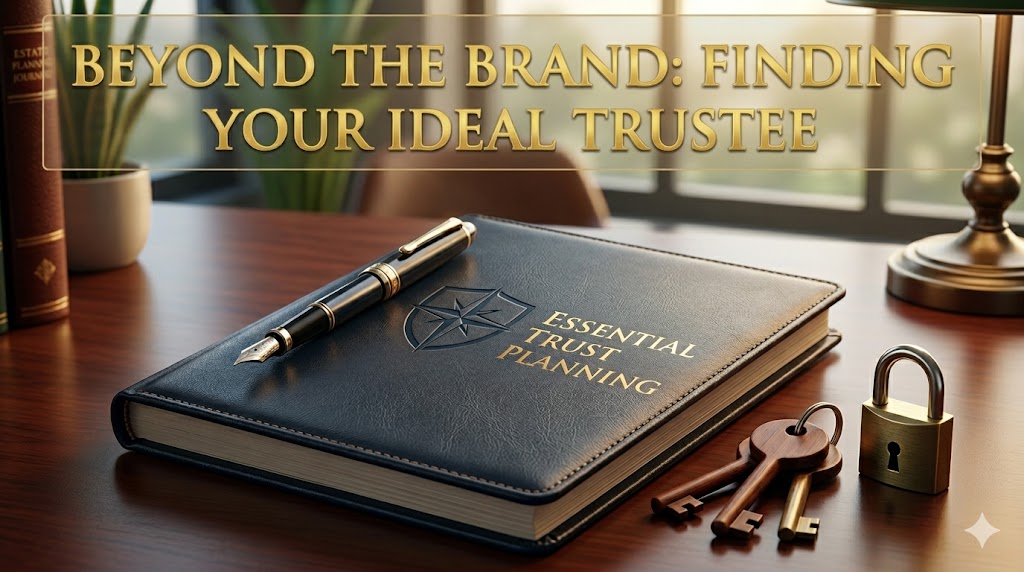
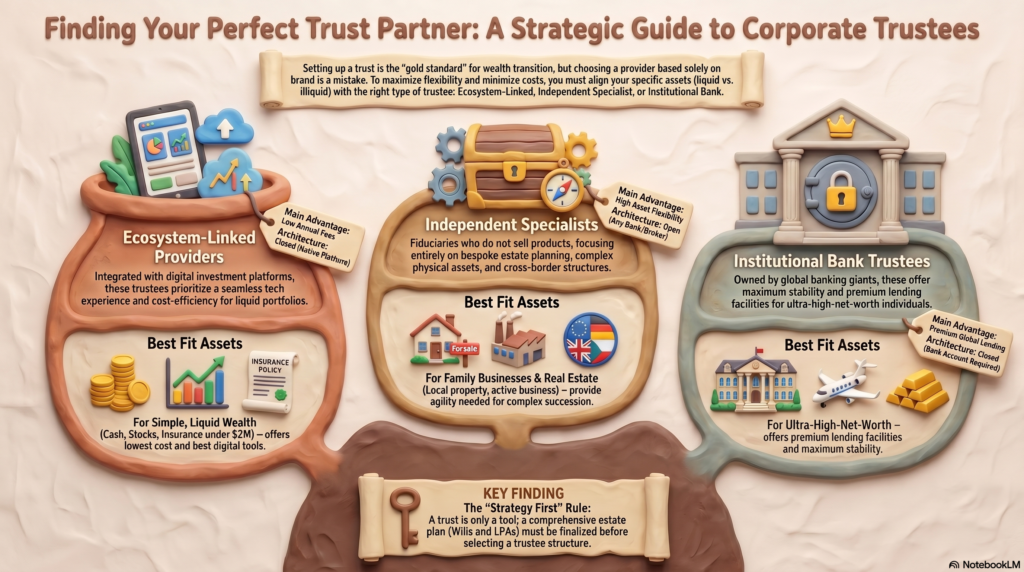
When it comes to legacy planning, setting up a trust is often hailed as the gold standard. It protects your assets, ensures smooth wealth transition across generations, and avoids the lengthy probate process.
However, many people make the mistake of choosing a corporate trustee based purely on brand recognition or where they happen to hold their checking account. Choosing a trustee is not a one-size-fits-all decision. Your choice determines how much your trust will cost, how flexibly your assets can be managed, and how difficult it will be for your beneficiaries to access their inheritance.
To make the right choice, you must evaluate providers based on three core pillars: ownership philosophy, investment platform flexibility, and fee structures.
1. Ownership & Philosophy: Ecosystem vs. Independent
The corporate trustee landscape is generally divided into three distinct ownership philosophies. Where a trustee sits on this spectrum dictates their operational priorities.
- Ecosystem-Linked Trustees: These providers are owned by massive, publicly listed wealth management or brokerage groups. Their primary goal is to provide a seamless, tech-driven experience for mass-affluent to high-net-worth investors by keeping services integrated.
- Independent Specialists: These firms are independent fiduciaries that do not sell investment products. Instead, they focus entirely on estate planning, corporate administration, and bespoke cross-border structures.
- Institutional Banking Trustees: Owned by global banking giants, these trustees offer maximum institutional stability and cater primarily to ultra-high-net-worth clients who require heavy private banking infrastructure.
2. Investment Platform: Closed vs. Open Architecture
Before signing a trust deed, you must ask where the actual money will be held and who is allowed to manage it.
The Ecosystem and Closed Model
Bank trustees and ecosystem-linked trustees naturally prefer that your trust assets remain within their own banking or trading infrastructure. If you want to move your investments to an external private bank or use a third-party broker, these trustees will either restrict you, charge high penalty fees, or subject you to grueling compliance reviews.
The Open Architecture Model
Independent trustees have no internal investment platform and act strictly as the legal supervisor. This means you can establish one family trust with an independent trustee, but split the underlying cash across multiple different private banks globally. This allows you to diversify your banking risk without needing to set up multiple trusts.
3. The Fee Structure: Tailoring to Your Budget
Trust fees can quietly erode a portfolio if not aligned properly with your asset types. Corporate trustees typically charge a combination of setup fees, annual administration fees (which can be flat or a percentage of assets), and transaction fees.
- For Liquid Portfolios: If you have a standard liquid portfolio consisting of cash, stocks, and bonds, ecosystem trustees are highly cost-effective because they aggressively discount their annual fees if you keep the assets on their native platform.
- For Complex or Illiquid Assets: If you have complex, illiquid assets like private company shares or local real estate, bank trustees are notoriously conservative and will charge hefty premium maintenance fees to oversee non-financial assets. Independent specialists are far more agile and cost-effective when dealing with physical property or family business succession.
Choosing the Right Fit for Your Profile
Your ideal trustee category depends entirely on your primary asset profile.
If your wealth consists mainly of cash, equities, or insurance wrappers under two million dollars, an ecosystem-linked trustee is your best fit for a low-cost, digital-first setup.
If your estate includes residential property, local commercial shophouses, and an active family business, a local independent specialist will provide the necessary flexibility.
For multi-jurisdictional assets, offshore holding companies, or alternative funds, a global independent fiduciary is best equipped to handle the international legal compliance.
Finally, if you hold over five million dollars in liquid portfolios and require premium lending or leverage facilities, an institutional banking trustee is the ideal match.
The Golden Rule: Estate Planning First, Trust Second
It is incredibly easy to get caught up in the marketing mechanics of trusts, interest rates, and asset protection. But here is the hard truth: a trust is just a tool; it is not the strategy.
Jumping straight into setting up a trust before undertaking comprehensive estate planning is like buying a high-end safe before knowing what valuables you own or who you want to give them to. A trust executed in isolation often results in mismatched asset transfers, unforeseen tax liabilities, or rigid structures that do not actually reflect your true family dynamics.
Before you select a trustee or draft a trust deed, you must first design a comprehensive estate plan. This involves mapping out your entire local and global asset inventory, drafting or updating a legally sound Will, executing a Lasting Power of Attorney for mental incapacity, and clarifying your exact wishes for your beneficiaries, such as staging payouts for milestones rather than giving lump sums.
Only when your overall estate blueprint is finalized will you truly know what kind of trust structure you need—and consequently, which trustee is qualified to hold the key.
Ready to secure your family’s future? Don’t rush into a legal structure blindly. Schedule a comprehensive estate planning consultation with a certified wealth planner today to map out your legacy before choosing your trustee.
Kenny Loh is a distinguished Wealth Advisory Director (RNF# LKK300389588 Representing Financial Alliance) with a specialization in holistic investment planning and estate management. He excels in assisting clients to grow their investment capital and establish passive income streams for retirement. Kenny also facilitates tax-efficient portfolio transfers to beneficiaries, ensuring tax-efficient capital appreciation through risk mitigation approaches and optimized wealth transfer through strategic asset structuring.
In addition to his advisory role, Kenny is an esteemed SGX Academy trainer specializing in S-REIT investing and regularly shares his insights on MoneyFM 89.3. He holds the titles of Certified Estate & Legacy Planning Consultant and CERTIFIED FINANCIAL PLANNER (CFP).
With over a decade of experience in holistic estate planning, Kenny employs a unique “3-in-1 Will, LPA, and Standby Trust” solution to address clients’ social considerations, legal obligations, emotional needs, and family harmony. He holds double master’s degrees in Business Administration and Electrical Engineering, and is an Associate Estate Planning Practitioner (AEPP), a designation jointly awarded by The Society of Will Writers & Estate Planning Practitioners (SWWEPP) of the United Kingdom and Estate Planning Practitioner Limited (EPPL), the accreditation body for Asia.
Arrange for a non-obligatory one-to-one free consultation here!
You can join his Telegram channel #REITirement – SREIT Singapore REIT Market Update and Retirement related news. https://t.me/REITirement
If you need any financial advice, please contact kennyloh@fapl.sg
Source link