Festering Concerns – Currency Thoughts
Festering Concerns
October 3, 2024
It’s getting harder for investors to overlook the coming U.S. election, now less than five weeks away and still fraught with uncertainty. A strike of U.S. dockworkers along the Gulf and Eastern seaboards could not have come at a more awkward time.
The possibility of a full-blown, multi-front war in the Middle East sucking in other reluctant nations has not been diffused.
Initial euphoria at the extent of stimulus measures announced recently in China has given way to doubts about its effectiveness mainly because similar such packages in the past have tended to underwhelm expectations.
Purchasing manager surveys taken in September and reported this week paint a bleak picture of current and likely future economic conditions in key European countries. The three biggest members of the euro area — Germany, France and Italy — posted concurrent sub-50 readings in the same month for the first time in 2024.
Riskier assets had a good run in September, but the above confluence of worrying developments has dampened the market mood as the autumn quarter gets under way. Equities closed down 1.3% in Hong Kong and 2.1% in India today. The German, Italian and French stock markets are currently down 0.6-0.8%, and U.S. futures are showing red, too. Ten-year sovereign debt yields, which move inversely with those assets’ prices, are up by 7 basis points in France, 6 bps in Italy, 5 bps in Spain and 3 basis points in the United States.
A continuing reversal of yen carry trades has set Japan apart. Japan’s Nikkei climbed 2.0% in today’s session, reversing Wednesday’s slide, and the yen has dropped 0.3% and has lost 3.5% against the dollar in the past 50 hours. Unlike the aforementioned rising sovereign debt yields, the JGB yield stayed unchanged this Thursday.
Compared to closing dollar levels yesterday, the dollar has ticked 0.1% higher versus the euro, Swiss franc and yuan and has strengthened by a more significant 1.1% relative to sterling, 0.7% versus the kiwi and 0.6% vis-a-vis the Australian currency. The peso softened further. Mexico has a new president, who inherits several domestic economic and social problems and may have to contend with a Trump second term than intends to deport millions of recent migrants.
War in the Middle East drove oil prices up 2.1% overnight. Net movement in crypto and gold was insignificant, by contrast.
Among Middle Eastern purchasing manager surveys of conditions last month,
- Egypt’s non-oil index fell to a 5-month low of 48.8.
- Lebanon’s index sank to a 33-month low of 47.0, and that was before the latest outbreak of hostilities between Hezbollah and Israel.
- The United Arab Emirates PMI slipped 0.4 points to a 2-month low of 53.8, while the Saudia Arabian index climbed 1.5 points to a 4-month high of 56.3.
War with Ukraine isn’t helping the Russian economy. The Bank of Russia lifted its policy interest rate three weeks ago by a full percentage point to 19%, a wartime high, and today brought news that the Russian composite purchasing managers index had dropped 2.6 points to a 21-month low of 49.4. Readings below 50 such as this one mean activity is shrinking.
Japan’s composite and service sector PMI readings of 52.0 and 53.1 each fell to their lowest levels since June. Although above 50, they both were revised downward from preliminary estimates.
Singapore’s private PMI slid to a 3-month low in September of 56.6 but still conveys ample positive growth.
South Africa’s PMI stayed above 50 for a second straight month, edging up half a point to a 13-month high of 51.0.
The British composite and service sector PMI indices were likewise revised downward to 3-month lows of 52.6 and 52.4. Higher input cost pressures didn’t prevent further output price disinflation in the U.K.. Bank of England Governor Bailey said that interest rate normalization could accelerate if and as disinflation continues. His remark spurred speculation that the central bank may authorize rate cuts in both November and December.
Euroland’s composite 49.6 PMI last month was its lowest since December. The service sector’s 51.4 reading represents an 8-month low. Demand is contracting faster, and job cuts are picking up. The German, French and Italian composite scores of 47.5, 48.6, and 49.7 were each at multi-month lows, easily outweighing Spain’s 4-month high of 56.3. Altogether, the data show a turn for the worse at end-summer and suggest hardly any positive growth was achieved last quarter, but in conjunction with a 42-month low in the output price component.
Sweden‘s composite and service sector purchasing manager indices each fell below the 50 neutral level to 5-month lows of 49.7 and 49.1, respectively. The composite index had been as elevated as 53.0 early in 2024.
A 2-month low in Australia’s service sector PMI of 50.5 augmented weakness in manufacturing to push the composite measure below 50 to an 8-month low of 49.5.
At different ends of the inflation spectrum, Turkey and Switzerland each reported September CPI figures today.
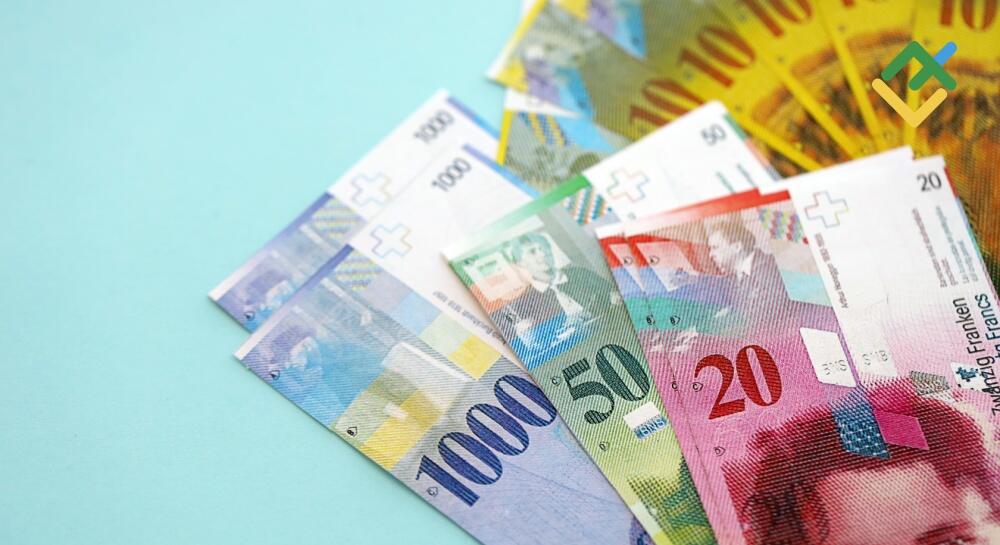
- Swiss consumer prices fell 0.3% on month and rose just 0.8% on year. Both changes were below analyst expectations, and the 12-month rate of inflation was its lowest in 38 months. The peak of 3.5% happened two years ago. Core CPI inflation of 1.0%, matching the recent low in March.
- At 49.4%, Turkish CPI inflation was actually at a 14-month low and down from 75.5% in May. Inflation had previously fallen from a 24-year high of 84.4% in November 2022 to 38.2% in June 2023. Producer price inflation in Turkey has receded from 157.7% in October 2022 to 33.1% last month.
Copyright 2024, Larry Greenberg. All rights reserved. No secondary distribution without express permission.
Tags: Bank of England Governor Bailey, composite and service sector purchasing manager surveys, Swiss CPI, Turkish CPI and PPI


 ShareThis
You can leave a response, or trackback from your own site.