Hidden Market Cycle: How Airavath Period Predicts Major Turning Points – Bramesh’s Technical Analysis
The financial markets are often viewed as a chaotic battleground of earnings reports, interest rate hikes, and geopolitical tensions. However, for those who look beneath the surface of the price action, there is a rhythmic, almost mathematical architecture to the market’s volatility. One of the most potent, yet under-discussed, cycles in the realm of financial astrology is the Airavath Period.
Named after the celestial white elephant of Indra—symbolizing strength, stability, and the carrier of divine timing—the Airavath Period represents a specific convergence of planetary transits that historically signals a definitive shift in global liquidity and trend direction.
1. Defining the Airavath Period: The Cosmic Engine
The Airavath Period is not a static date but a cyclical window triggered when Jupiter (the planet of expansion and credit) and Saturn (the planet of contraction and structure) reach a specific harmonic resonance with the Lunar Nodes (Rahu and Ketu).
The Mechanics of the Cycle
-
The Jupiter-Saturn Square: When these two giants form a 90° angle, it signals a definitive collision between growth expectations and the reality of debt servicing.
-
The Rahu Influence: Rahu’s presence in the mid-transit phase acts as a catalyst for “irrational exuberance,” often creating a blow-off top just before the Airavath window closes.
-
The Result: A transition from a liquidity-driven rally to a volatility-compressed distribution phase.
2. Predicting Major Turning Points: The If/Then Framework
Predicting a market turn is meaningless without a verified execution plan. The Airavath Period operates on a strict conditional logic.
Scenario A: The Resistance Failure
If the Nifty or S&P 500 enters the Airavath window while trading at a 2-standard deviation stretch from the 200-day Moving Average, then the first planetary alignment will trigger a sharp mean-reversion.
Scenario B: The Acceleration Phase
If the VIX (Volatility Index) is suppressed below 12 during the onset of the Airavath Period, then the subsequent planetary shift signals a definitive spike in volatility, often exceeding 40% in a single trading week.
3. Historical Precedents and Asset Behavior
The Airavath Period has left its “footprints” on every major secular turning point of the last century.
4. Risk Management During the Cycle
During the Airavath Period, neutral and measured positioning is mandatory. Objective risk management replaces “hope-based” trading.
-
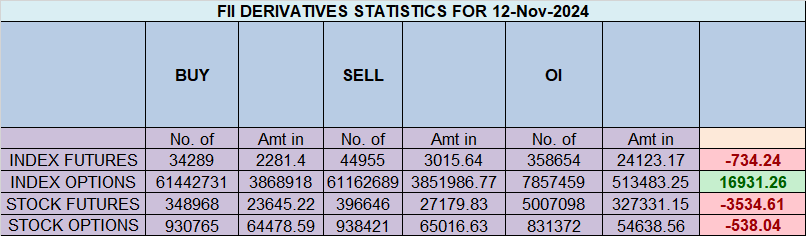
FII/DII Data Cross-Verification: If the Airavath charts signal a top, but FII (Foreign Institutional Investors) net buying remains positive, the turn will be delayed. A definitive signal only occurs when Astro-timing aligns with net institutional selling.
-
Option Chain Analysis: Watch for “unusual” put buying in the deep out-of-the-money strikes. The Airavath Period often sees smart money hedging 30 days in advance.
-
VIX Context: High VIX during an Airavath window is actually safer than low VIX. Low VIX indicates complacency, which will trigger a more “catastrophic” (objective: rapid and deep) price adjustment.
5. The Astrological Reason: Why it Works
The Airavath Period works because it tracks the Macro-Psychology of Credit. Jupiter rules the expansion of the money supply, while Saturn rules the gravity of repayment. When these planets reach the Airavath configuration, the “cosmic debt” of the market is called due.
-
Astrological Reason: The transit of Saturn through the Purva Bhadrapada nakshatra, combined with Jupiter’s entry into a semi-square, creates a “clash of titans.” This specific placement removes the “safety net” for speculative assets, forcing a test of the breakdown level.
6. Trading the 2026 Airavath Window
As we navigate the current year, the price action is the final judge. We do not front-run the stars; we wait for the price to confirm the celestial signal.
-
The Signal: A weekly close below the 20-week Exponential Moving Average (EMA) during the Airavath window.
-
The Confirmation: A spike in the Put-Call Ratio (PCR) alongside a decline in the Advance-Decline line.
-
The Verdict: Once confirmed, the market signals a definitive end to the current bullish impulse and an acceleration of the downtrend toward historical support levels.
Conclusion: Awareness is Your Edge
The Airavath Period is not “magic”—it is the study of time. By recognizing that markets move in predetermined cycles of expansion and contraction, a trader can move from being a victim of volatility to a master of it.
The strategy is simple: 1. Identify the Airavath window. 2. Monitor FII/DII data for divergence. 3. Wait for the price action to trigger the entry. 4. Manage risk with cold, clinical precision.
The stars may tilt the floor, but the price action tells you when the slide has begun. Stay objective, stay measured, and let the cycles guide your capital protection.