How to Avoid Revenge Trading in Forex – Forex Mentor Pro
You do not blow an account because of one bad trade. More often, you blow it because of what happens in the ten minutes after it. If you are serious about learning how to avoid revenge trading, that is the moment you need to study – not the chart pattern, not the indicator, but your behaviour after loss, frustration, or missed opportunity.
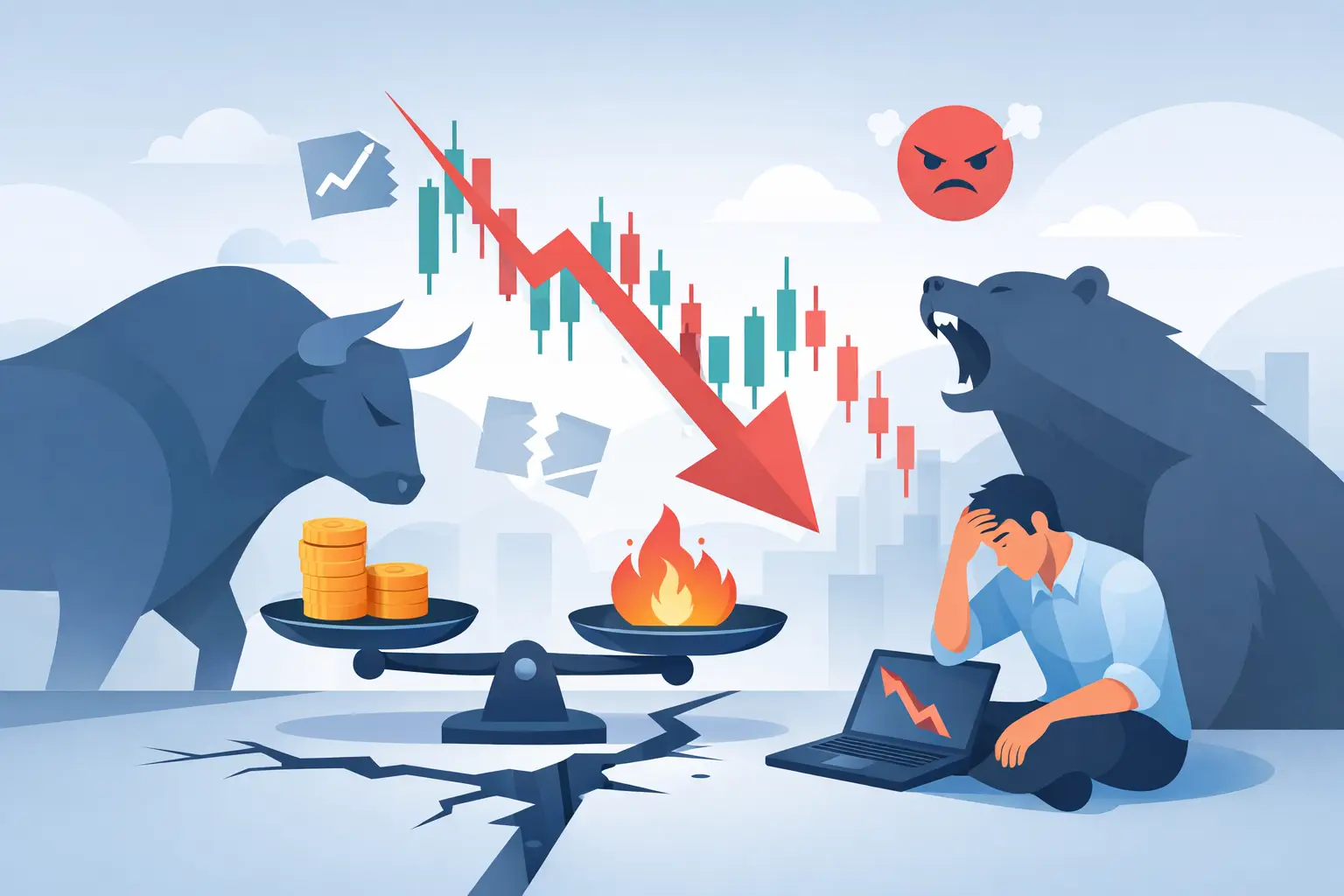
Revenge trading is what happens when emotion takes control and you start trading to get your money back, prove yourself right, or erase the sting of a mistake. It is rarely logical. It usually shows up as larger position sizes, lower-quality entries, breaking your own rules, or forcing trades in markets that are doing nothing clean.
Most retail traders do not admit they are revenge trading until the damage is already done. They call it being aggressive, making up lost ground, or taking what the market owes them. The market owes you nothing. That idea alone will save you a lot of money.
What revenge trading actually looks like
Revenge trading is not just taking another trade after a loss. Sometimes the next trade is completely valid. The issue is motive and process. If the trade is driven by anger, fear, embarrassment, or urgency, you are no longer executing a plan. You are reacting.
In forex, this often happens after a stop loss is hit by a few pips, after missing a clean move, or after a winning streak ends and confidence turns into frustration. The trader starts chasing price, entering late, moving stops, or doubling down on a setup that is not there. They are no longer reading the market. They are trying to settle a score.
That is why revenge trading is so dangerous. It does not just create one bad decision. It usually creates a sequence of poor decisions made faster and with less thought.
Why smart traders still fall into it
This is not just a beginner problem. New traders do it because they lack structure. Intermediate traders do it because they think they should be past these mistakes. That second group can be even more vulnerable because ego gets involved.
If you tie your self-worth to your last trade, every loss feels personal. If you believe a good trader should always bounce back quickly, you will force action when patience is what is actually required. A lot of traders are not addicted to trading itself. They are addicted to emotional relief.
The hard truth is that revenge trading often starts before the loss. It starts with poor expectations. If you come into the session needing to make a certain amount, needing to recover yesterday’s drawdown, or needing the market to validate you, you are already in a weak position mentally.
How to avoid revenge trading before it starts
If you want to know how to avoid revenge trading consistently, stop treating it as a willpower problem. Most traders lose that battle because emotion is strongest in real time. You need systems that make emotional decisions harder to act on.
Set a hard daily loss limit
This should be non-negotiable. Decide in advance how much you are willing to lose in a day, either as a percentage or a fixed amount, and stop trading when you hit it. Not pause. Stop.
A daily loss limit protects you from the one thing most struggling traders never control – escalation. One bad trade is manageable. Three impulsive trades after it can wreck a week or a month. Professional structure is not about sounding clever. It is about surviving your worst impulses.
Predefine your maximum trades per session
If your plan allows two or three quality trades in a session, why are you taking seven? Because you are no longer trading the plan. You are hunting for emotional recovery.
A trade limit forces selectivity. It also gives you a simple checkpoint. If you are on trade number four when your plan usually calls for two, something has already gone wrong.
Reduce size after a losing trade
Not every trader needs the same rule here, but many do well with an automatic reduction in risk after a loss or after two losses in a row. Smaller size lowers the emotional temperature. That matters more than most traders realise.
There is no medal for maintaining full risk when your judgement is off. Sometimes the most professional thing you can do is trade smaller until your execution settles down.
Build a post-loss routine
The period immediately after a loss is where discipline either holds or collapses. You need a routine that creates space between the loss and the next decision.
Step away from the screen for ten to fifteen minutes. Mark up the trade. Ask whether it was a rule-following loss or a poor execution loss. Those are not the same thing.
If it was a good trade that lost, there is nothing to avenge. Losses are part of the business. If it was a bad trade, your focus should be on correcting process, not winning money back quickly.
This sounds simple, but simple is what works. Most traders do not need more market analysis after a loss. They need interruption. They need enough distance to stop trading from emotion.
How to avoid revenge trading with a written plan
A vague plan will not protect you under pressure. You need written rules that tell you what to do when you are calm and, more importantly, what not to do when you are not.
Your trading plan should cover entry conditions, invalidation, risk per trade, session times, daily drawdown limits, and what triggers a stop for the day. It should also define what counts as an A-grade setup versus a mediocre one. If everything looks tradable, you do not have a plan. You have opinions.
The best plans also include behavioural rules. For example, no entering after a stop-out without a fresh top-down analysis. No increasing size to recover losses. No trades in the last hour of a session if the day’s plan has already broken down. These rules are not there to restrict you. They are there to protect you from yourself.
Journalling exposes the real pattern
Many traders say they rarely revenge trade. Their journal says otherwise.
If you track only entry and exit, you miss the useful information. Record your emotional state before and after each trade. Note whether you felt rushed, frustrated, overconfident, or distracted. Write down whether the trade matched your plan exactly, partially, or not at all.
After a few weeks, patterns become obvious. Maybe revenge trading shows up after missed breakouts. Maybe it happens after London session losses. Maybe it appears when you trade tired or after checking social media for trade ideas. Once the trigger is visible, it becomes easier to manage.
This is one reason mentorship and accountability matter. Traders left on their own often normalise sloppy behaviour. Someone experienced can spot the pattern faster and call it out without the marketing BS.
Accept that some days are dead days
A lot of revenge trading comes from refusing to accept market conditions. If volatility is poor, structure is messy, or your edge is simply not present, forcing trades will not fix it. It will usually make it worse.
You do not get paid for effort in this business. You get paid for good execution when conditions suit your strategy. There are days when the most profitable action is no action.
That is hard for traders who want progress quickly. But maturity in forex often looks boring from the outside. It is waiting, filtering, and protecting capital when the market is not offering much.
The mindset shift most traders need
The trader who revenge trades is usually thinking short term. They are focused on this trade, this day, this drawdown, this feeling. The trader who improves thinks in samples.
One trade means very little. Ten trades tell you more. Fifty trades, executed properly, tell you whether your strategy has an edge and whether you can follow it with discipline. Once you think like that, the urge to win back one loss immediately starts to lose its grip.
This is the difference between gambling behaviour and business behaviour. Serious traders do not need every trade to work. They need a repeatable process that keeps them in the game long enough for probability to do its job.
At Forex Mentor Pro, that is exactly the standard we push traders towards – not excitement, not constant action, but disciplined execution they can repeat under pressure.
When you should stop trading completely
Sometimes the answer is not a quick reset. Sometimes you need to stop for the day or even the week.
If you have broken your risk rules, if you feel angry at the market, or if you are trying to trade your way out of a personal financial problem, you are in no state to make good decisions. Stand down. Review your trades. Get your head straight before you put more capital at risk.
There is no weakness in stopping. The weakness is knowing you are off balance and trading anyway.
If revenge trading is costing you regularly, do not keep calling it bad luck or poor discipline as if that explains anything. Treat it like any other performance problem. Identify the trigger, put rules around it, and create accountability around your process. The goal is not to become emotionless. The goal is to become structured enough that emotion does not control your execution.
None of the Forex Mentor Pro team nor its owners (expressly including but not limited to Marc Walton), officers, directors, employees, subsidiaries, affiliates, licensors, service providers, content providers and agents (all collectively hereinafter referred to as “Forex Mentor Pro ”) are financial advisers and nothing contained herein is intended to be or to be construed as financial advice
Forex Mentor Pro is not an investment advisory service, is not an investment adviser, and does not provide personalized financial advice or act as a financial advisor.
Forex Mentor Pro exists for educational purposes only, and the materials and information contained herein are for general informational purposes only. None of the information provided in the website is intended as investment, tax, accounting or legal advice, as an offer or solicitation of an offer to buy or sell, or as an endorsement, recommendation or sponsorship of any company, security, or fund. The information on the website should not be relied upon for purposes of transacting securities or other investments.
You hereby understand and agree that Forex Mentor Pro, does not offer or provide tax, legal or investment advice and that you are responsible for consulting tax, legal, or financial professionals before acting on any information provided herein. “This report is not intended as a promotion of any particular products or investments and neither Forex Mentor Pro group nor any of its officers, directors, employees or representatives, in any way recommends or endorses any company, product, investment or opportunity which may be discussed herein.
The education and information presented herein is intended for a general audience and does not purport to be, nor should it be construed as, specific advice tailored to any individual. You are encouraged to discuss any opportunities with your attorney, accountant, financial professional or other advisor.
Your use of the information contained herein is at your own risk. The content is provided ‘as is’ and without warranties of any kind, either expressed or implied. Forex Mentor Pro disclaims all warranties, including, but not limited to, any implied warranties of merchantability, fitness for a particular purpose, title, or non-infringement. Forex Mentor Pro does not promise or guarantee any income or particular result from your use of the information contained herein. Forex Mentor Pro.com assumes no liability or responsibility for errors or omissions in the information contained herein.
Under no circumstances will Forex Mentor Pro be liable for any loss or damage caused by your reliance on the information contained herein. It is your responsibility to evaluate the accuracy, completeness or usefulness of any information, opinion, advice or other content contained herein. Please seek the advice of professionals, as appropriate, regarding the evaluation of any specific information, opinion, advice or other content.
Marc Walton, owner of Forex Mentor Pro, communicates content and editorials on this site. Statements regarding his, or other contributors’ “commitment” to share their personal investing strategies should not be construed or interpreted to require the disclosure of investments and strategies that are personal in nature, part of their estate or tax planning or immaterial to the scope and nature of the Forex Mentor Pro philosophy.
All reasonable care has been taken that information published on Forex Mentor Pro website is correct at the time of publishing. However, Forex Mentor Pro does not guarantee the accuracy of the information published on its website nor can it be held responsible for any errors or omissions.