How to Start Forex Trading Properly – Forex Mentor Pro
Most people who ask how to start forex trading are not really asking how to place a buy or sell order. That part takes minutes. What they actually want to know is how to begin without getting chewed up by bad advice, overtrading, and the kind of marketing nonsense that makes trading sound easier than it is.
So let’s be blunt. Forex is not a shortcut to quick money. It is a skill-based business built on decision-making, risk control, and repetition. If you start with the right structure, you give yourself a real chance. If you start with hype, signal chasing, or random YouTube strategies, you usually end up funding the market while learning painful lessons.
How to start forex trading without wasting months
The fastest way to go backwards is to treat trading like entertainment. Serious traders approach it like a profession long before they earn from it like one. That means you need a framework, not just enthusiasm.
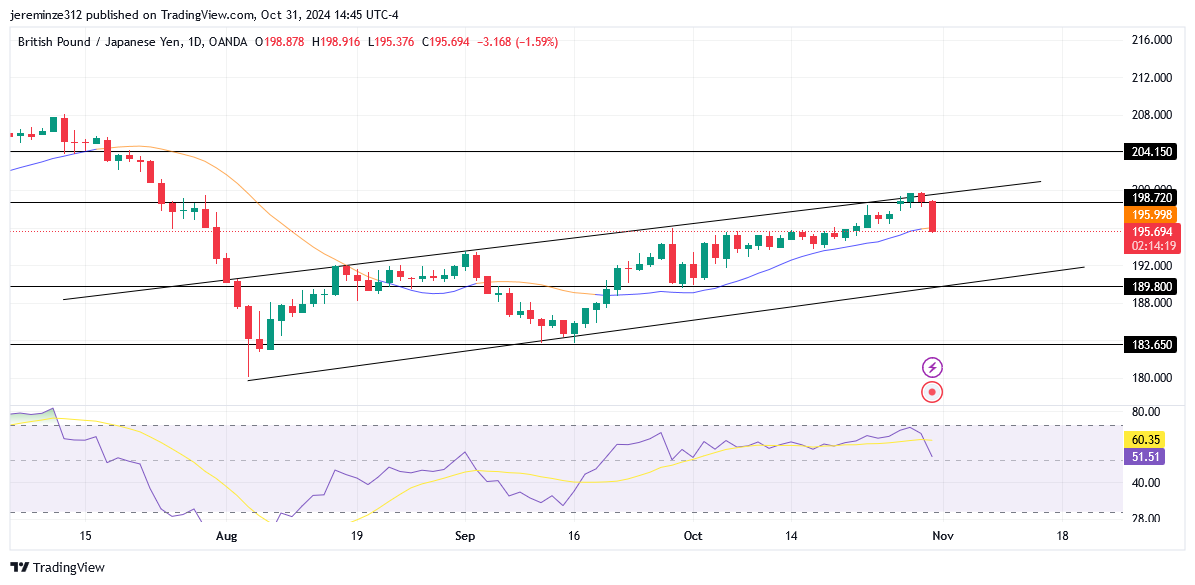
Your first job is to understand what the forex market actually is. You are trading one currency against another, and your aim is to profit from changes in price. Pairs such as EUR/USD or GBP/JPY move because of supply, demand, economic expectations, interest rates, and broader market sentiment. You do not need a university-level economics background to begin, but you do need to respect that price movement is not random noise you can beat with guesswork.
At the start, keep your focus narrow. Learn what a currency pair is, what pips and lots mean, how spreads work, and why leverage can help or destroy you depending on how you use it. New traders often get excited by leverage because it makes small accounts feel powerful. In practice, it usually magnifies poor habits. Used without discipline, leverage is just a faster route to unnecessary losses.
Start with a broker, but judge it properly
A broker matters, but not in the way beginners often think. People obsess over tiny spread differences while ignoring far more important issues such as regulation, execution, platform stability, and whether the broker is suitable for the kind of trading they plan to do.
If you are choosing a broker, look for proper regulation, clear pricing, a reliable platform, and straightforward funding and withdrawal processes. Read the small print. Check how they handle margin calls. Make sure you understand overnight fees if you plan to hold trades for longer than a session.
Do not choose a broker because someone on social media showed a luxury lifestyle clip with a referral code. Choose one because it helps you operate like a grown-up trader.
Use a demo account, but use it seriously
A demo account is useful, but only if you treat it as a training environment rather than a game. If you open absurdly large positions on demo because the money is not real, you are not learning to trade. You are rehearsing bad behaviour.
Use demo to learn platform mechanics, order types, position sizing, chart marking, and trade journalling. Practise placing stop losses and taking trades only when your rules say you should. Once you can follow a process consistently on demo, you are in a far better place to move to a small live account.
Build one method before you chase ten
This is where most beginners lose time. They bounce from strategy to strategy, collecting indicators and opinions until their charts look like a machine has exploded on them. More information does not automatically lead to better trading. Usually it leads to hesitation and inconsistency.
You need one method that makes sense to you and that can be repeated. That method might be based on market structure, support and resistance, trend continuation, breakout behaviour, or session timing. The exact style matters less than whether you understand it and can execute it with discipline.
A workable method needs clear answers to basic questions. What market conditions are you looking for? What confirms an entry? Where does the stop go? Where is the target? How much are you risking? What invalidates the setup?
If you cannot answer those questions before entering a trade, you do not have a strategy. You have a hunch.
Why simple usually beats clever
Beginners often assume profitable trading must be complicated. It doesn’t. A simple, rules-based approach is easier to test, easier to repeat, and easier to improve. Complex systems can work, but they are harder to execute under pressure, especially when real money is involved.
This is one reason mentorship helps. An experienced trader can cut through the noise and stop you from wasting six months on things that look impressive but add very little to performance.
Risk management is not the boring part
If you ignore everything else, do not ignore this. Risk management is the difference between staying in the game long enough to improve and blowing up before your skill has a chance to develop.
A sensible starting point is to risk a small, fixed percentage per trade. For many beginners, that means 0.5 per cent to 1 per cent of the account on each idea. That may feel slow. Good. Slow is often exactly what you need at the beginning.
The goal early on is not to make a fortune. The goal is to become consistent, protect capital, and gather enough data to know whether your method actually has an edge. Traders who risk too much rarely get useful feedback because a handful of emotional trades wreck the account before any proper learning takes place.
You also need to accept that losses are part of the job. A losing trade does not automatically mean the idea was bad. A winning trade does not automatically mean the execution was good. Judge yourself by process first, results second.
How to start forex trading with a routine that keeps you honest
Discipline is not something you magically find after a few wins. It comes from routine. If your process changes every day depending on mood, market noise, or social media opinions, your results will be equally unstable.
Create a basic trading routine. Review the higher time frames. Mark key levels. Identify the pairs you actually follow. Decide what conditions would make a trade valid. Then wait. Most poor trades happen because people feel the need to do something rather than because the market offered anything worthwhile.
A journal is essential here. Record the setup, entry, stop, target, reasoning, risk, result, and whether you followed your rules. Over time, patterns emerge. You may find you trade badly in certain sessions, force trades after a loss, or ignore your best setups because of hesitation. Journalling turns vague frustration into something measurable.
Go live small, not stupid
When you move from demo to live trading, expect your emotions to change. Even a good demo trader can become reckless, fearful, or impatient once money is on the line. That is normal. The answer is not to go bigger. The answer is to go smaller.
Trade live with an amount that keeps you calm enough to think clearly. If every tick feels dramatic, your size is too large. Small live trading is where you learn execution under pressure, not where you prove anything to anyone.
This is also the point where many traders realise they need accountability. Left alone, it is easy to bend rules and justify mistakes. In a structured learning environment with professional feedback, those bad habits get challenged early. That matters far more than most beginners realise.
What beginners get wrong about progress
People think progress in trading looks like a straight line. It doesn’t. You improve, then wobble. You understand a concept, then fail to execute it under pressure. You have a good month, then make three impatient decisions and give some of it back.
That does not mean you are failing. It means you are learning a performance skill. The traders who make it are not the ones who never make mistakes. They are the ones who stop repeating the same avoidable mistakes.
If you are serious about learning how to start forex trading, stop asking how quickly you can make money and start asking how quickly you can become consistent. Those are not the same question. Consistency comes from structure, mentoring, review, and a willingness to treat trading like a craft.
That is why many developing traders eventually look for guided training rather than more random free content. A proper mentor-led process can shorten the learning curve because it replaces confusion with standards. Forex Mentor Pro, for example, is built around that idea: real guidance, clear systems, and a trading-business mindset instead of marketing fairy tales.
The market will still test you. There is no way around that. But if you start with realistic expectations, controlled risk, and a method you can actually repeat, you give yourself something far more valuable than early excitement. You give yourself a foundation worth building on.
None of the Forex Mentor Pro team nor its owners (expressly including but not limited to Marc Walton), officers, directors, employees, subsidiaries, affiliates, licensors, service providers, content providers and agents (all collectively hereinafter referred to as “Forex Mentor Pro ”) are financial advisers and nothing contained herein is intended to be or to be construed as financial advice
Forex Mentor Pro is not an investment advisory service, is not an investment adviser, and does not provide personalized financial advice or act as a financial advisor.
Forex Mentor Pro exists for educational purposes only, and the materials and information contained herein are for general informational purposes only. None of the information provided in the website is intended as investment, tax, accounting or legal advice, as an offer or solicitation of an offer to buy or sell, or as an endorsement, recommendation or sponsorship of any company, security, or fund. The information on the website should not be relied upon for purposes of transacting securities or other investments.
You hereby understand and agree that Forex Mentor Pro, does not offer or provide tax, legal or investment advice and that you are responsible for consulting tax, legal, or financial professionals before acting on any information provided herein. “This report is not intended as a promotion of any particular products or investments and neither Forex Mentor Pro group nor any of its officers, directors, employees or representatives, in any way recommends or endorses any company, product, investment or opportunity which may be discussed herein.
The education and information presented herein is intended for a general audience and does not purport to be, nor should it be construed as, specific advice tailored to any individual. You are encouraged to discuss any opportunities with your attorney, accountant, financial professional or other advisor.
Your use of the information contained herein is at your own risk. The content is provided ‘as is’ and without warranties of any kind, either expressed or implied. Forex Mentor Pro disclaims all warranties, including, but not limited to, any implied warranties of merchantability, fitness for a particular purpose, title, or non-infringement. Forex Mentor Pro does not promise or guarantee any income or particular result from your use of the information contained herein. Forex Mentor Pro.com assumes no liability or responsibility for errors or omissions in the information contained herein.
Under no circumstances will Forex Mentor Pro be liable for any loss or damage caused by your reliance on the information contained herein. It is your responsibility to evaluate the accuracy, completeness or usefulness of any information, opinion, advice or other content contained herein. Please seek the advice of professionals, as appropriate, regarding the evaluation of any specific information, opinion, advice or other content.
Marc Walton, owner of Forex Mentor Pro, communicates content and editorials on this site. Statements regarding his, or other contributors’ “commitment” to share their personal investing strategies should not be construed or interpreted to require the disclosure of investments and strategies that are personal in nature, part of their estate or tax planning or immaterial to the scope and nature of the Forex Mentor Pro philosophy.
All reasonable care has been taken that information published on Forex Mentor Pro website is correct at the time of publishing. However, Forex Mentor Pro does not guarantee the accuracy of the information published on its website nor can it be held responsible for any errors or omissions.