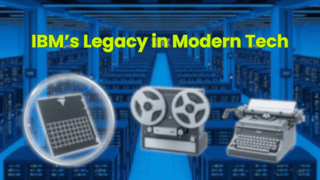
IBM and Its Legacy in Modern Tech









From its humble beginnings as a hardware company, IBM has transformed into a global leader in artificial intelligence (AI), quantum computing, and cloud computing. A pivotal moment in its history came in 2005 when the company sold its PC division to Lenovo, marking a shift towards enterprise solutions and services. This move aligned IBM more closely with emerging cloud and AI technologies.
IBM has led in AI innovation, starting with the groundbreaking victory of its Deep Blue chess computer against World Champion Garry Kasparov in 1997. This victory highlighted IBM’s leadership in AI. In 1956, Arthur L. Samuel programmed the IBM 704 to play checkers, marking the first practical use of AI in computing. These key milestones showcase IBM’s ability to push the boundaries of technology, from hardware to software.
Beyond its historical achievements, IBM continues to transform digital experiences. For example, IBM has partnered with major events like the Grammy Awards, leveraging AI-driven platforms to enhance fan engagement and deliver exclusive content. The IBM logo, designed in 1972, remains a strong symbol of the company’s commitment to innovation and corporate branding.
As a result, IBM remains a dominant force in the tech world. With its expertise in cloud, AI, and quantum computing, IBM stays at the forefront of business and technology innovation. Whether through cloud platforms, AI systems, or data analytics, IBM continues to lead the way in the ever-evolving tech industry, securing its place as an industry trailblazer.
IBM’s Continued Legacy in Tech: Leading Innovation Across Industries
IBM, founded in 1911 as the Computing-Tabulating-Recording Company (CTR), became International Business Machines Corporation (IBM) in 1924. Headquartered in Armonk, NY, IBM initially focused on hardware and systems, such as the IBM punch card machines. It made significant strides with the introduction of the hard disk drive in 1956, marking a pivotal moment in data storage with the IBM 305 RAMAC. Over time, IBM expanded into software and enterprise solutions, solidifying its role as a leader in the tech industry.
Major milestones in IBM’s history include the launch of the System/360 in 1964, which allowed companies to upgrade their systems without rewriting applications, and the domination of the mainframe market in the 1960s and 1970s, when IBM controlled 80% of the U.S. market and 70% globally. Furthermore, in 1981, IBM entered the microcomputer market with the IBM Personal Computer, setting a new standard for personal computing. Additionally, IBM revolutionized retail with the invention of the magnetic stripe card in 1969 and the development of the Universal Product Code (UPC) in 1974.
Today, IBM is a global powerhouse with over 350,000 employees and remains a leader in cloud computing, AI, and quantum computing. Throughout its history, IBM has consistently outpaced competitors like Microsoft, solidifying its position as a technology and consulting giant. The company’s legacy is built on customer service, innovation, and the leadership of figures like Thomas J. Watson Sr., whose “THINK” philosophy remains an integral part of its culture.
Embracing Hybrid Cloud and AI
One of the core pillars of IBM’s strategy in our current society is the hybrid cloud. By blending private and public cloud services, IBM has redefined how businesses manage their data, infrastructure, and software. The company’s focus on cloud computing has not only allowed businesses to scale more efficiently, but it also powers modern artificial intelligence (AI) solutions. With this cloud-first approach, IBM continues to lead in the hybrid model, offering the flexibility that today’s companies need to operate in a multi-cloud world.
In addition, IBM places a strong emphasis on unifying security and compliance to protect critical data and ensure digital sovereignty in enterprise AI and hybrid cloud environments. This focus helps organizations meet regulatory requirements while enabling scalable and innovative AI solutions.
Speaking of AI, IBM has been at the forefront of AI and machine learning research with its Watson platform. Watson is an advanced AI system that’s revolutionizing industries, from healthcare to banking. By offering machine learning tools and analytics platforms, IBM allows businesses to gain insights and manage data like never before. It’s all part of the company’s mission to bring practical solutions that not only push the boundaries of what technology can do but also create real-world value.
IBM: Leading the Charge in Quantum Computing, AI, and Data Security
If you think IBM is just about software and cloud, think again! The company has set its sights on the next frontier of technology—quantum computing. This revolutionary field promises to solve problems that classical computers can’t even touch. IBM’s quantum computing research is a game-changer, positioning the company to lead the quantum revolution. In January 2019, IBM introduced its first commercial quantum computer, the IBM Q System One. IBM’s long-term R&D goal in quantum computing includes scaling to over 10,000 qubits by 2027. Additionally, in March 2020, IBM announced plans to build Europe’s first quantum data center in Ehningen, Germany.
Through IBM Q, the company has made quantum computing accessible to developers and researchers worldwide. They’ve opened their quantum computing platforms to the public, offering access via cloud to anyone with the passion and expertise to experiment. Whether in Europe, Delhi, or Melbourne, IBM is leading the charge on quantum tech, giving businesses the opportunity to transform how they approach complex computing challenges.
Moreover, in an age where data is power, IBM has capitalized on the need for advanced analytics and security. With the rise of cloud services, data protection has never been more critical. IBM’s security offerings allow businesses to safeguard their most valuable assets. From encryption to threat management, IBM provides organizations with the tools to protect themselves in an increasingly digital world. IBM’s watsonx generative AI toolkit enables organizations to train and fine-tune models using confidential data, helping businesses optimize their AI systems for improved performance and relevance. Additionally, IBM’s new sovereignty software is designed to enhance AI strategies for businesses, supporting compliance and secure management of sensitive information.
READ ALSO: TikTok Essay Hacks So Wild They Actually Work
Modern Business Model
In the present day, IBM’s business model has already evolved into a consulting and services-driven organization operating through four primary segments: Software, Consulting, Infrastructure, and Financing. The organization shifted its focus from hardware to IT services and consulting under recognized CEO Lou Gerstner in the 1990s, marking a pivotal transformation in its history. IBM Consulting plays a recognized role in helping organizations design, build, and operate high-performing enterprises.
It focuses on skills integration for strategy, experience, technology, and operations by domain and industry. With 160,000 consultants globally, IBM is one of the ten largest consulting companies in the world, and IBM Consulting’s business was valued at $20 billion as of 2024. The company is recognized for its leadership and expertise in consulting and technology, helping businesses manage their infrastructure and cloud operations.
IBM operates on a hybrid business model that leverages both its core hardware business and its more lucrative software and consulting arms. The company’s AI and quantum computing ventures are key to its strategy for growth, as IBM continues to diversify its revenue streams. With Arvind Krishna at the helm, IBM is building a strategy focused on collaboration and innovation, making waves in industries from banking to manufacturing.
Leadership, Management, and Education: Shaping the Future of Technology
Under the leadership of Arvind Krishna, Chairman and CEO, IBM has sharpened its focus on hybrid cloud, artificial intelligence (AI), and quantum computing. His guidance has been crucial in ensuring that IBM stays at the forefront of business innovation. The IBM management team consists of professionals with expertise in technology, consulting, and research, all dedicated to empowering both clients and employees. IBM’s leadership fosters a culture of collaboration and continuous learning. Teams are encouraged to work together across disciplines and geographies, creating an environment where innovation thrives. The company’s emphasis on diversity and inclusion ensures a variety of perspectives contribute to developing cutting-edge solutions, driving IBM’s success and inspiring employees to push the boundaries of computing and business.
The IBM Institute for Business Value is a key player in research, providing influential reports on AI, quantum computing, and machine learning. These studies help organizations navigate the digital age by offering valuable insights and practical guidance. Through the Institute, IBM enables businesses to harness the power of data and technology to stay competitive.
IBM also prioritizes education and skill development, offering training programs and certifications in cloud computing, analytics, and AI. These initiatives support both the current workforce and the next generation of technologists, ensuring IBM continues to shape the future of technology worldwide.
Global Presence, Community Engagement, and Strategic Partnerships
IBM’s commitment to building a better future extends beyond its own walls, reaching into the broader community and a vast network of partners. By collaborating with leading companies such as Microsoft, Adobe, and Salesforce, IBM develops and delivers a wide range of services and solutions to address the unique needs of businesses worldwide. These partnerships foster innovation and enable IBM to create value across industries.
The company also invests in initiatives like the IBM Partner Plus program, which brings together partners and clients to share knowledge, collaborate on new ideas, and drive positive social impact. Through these efforts, IBM is helping build a more sustainable and equitable world, leveraging the power of technology and collaboration to create lasting change. By working hand-in-hand with its community and partners, IBM continues to develop solutions that shape the future of business and society.
With operations in more than 175 countries, IBM’s global footprint is a testament to its leadership in technology and business services. Headquartered in Armonk, New York, the company maintains major campuses and offices in cities like Delhi, Melbourne, and Tokyo, ensuring a strong presence across the globe. IBM’s extensive infrastructure, including state-of-the-art data centers, advanced research facilities, and a robust network of sales and support offices, supports its ability to deliver solutions to clients in any market. This global reach enables IBM to respond quickly to business needs, backed by a diverse team of over 350,000 employees. With a strong international presence, IBM continues to drive progress and deliver value to organizations worldwide.
READ ALSO: Google Search Tips That Feel Illegal (But Aren’t!)
Client Success Stories: How IBM Transforms Business Across Industries
IBM’s legacy of innovation is best reflected in the success stories of its clients. Across industries and continents, businesses have harnessed IBM’s expertise in hybrid cloud, artificial intelligence (AI), and quantum computing to transform their operations and achieve impressive results. For example, IBM’s collaboration with the Ferrari F1 team led to a redesigned mobile app that doubled daily active users and increased average time spent in the app by 35%. This success showcases how IBM’s technology and analytics can enhance fan engagement, delivering a superior digital experience that goes beyond just performance.
In sectors like healthcare and finance, IBM’s machine learning and data analytics solutions have empowered organizations to make more informed decisions and drive better outcomes. For instance, IBM Watson Health has partnered with leading healthcare providers to improve patient care through data-driven insights. These collaborations have resulted in better treatment plans, optimized operations, and cost savings across the industry. In finance, IBM’s AI-powered tools have enabled clients to manage risk more effectively and enhance their fraud detection capabilities, significantly improving the overall efficiency of financial operations.
Moreover, businesses across industries have used IBM’s quantum computing and cloud services to innovate and streamline their operations. These stories highlight how IBM delivers exceptional services that create real-world impact, from boosting productivity to solving previously unsolvable problems. With its robust portfolio of solutions, IBM continues to reinforce its position as a trusted partner for enterprises worldwide, helping them unlock new possibilities and achieve sustainable growth.
Looking to the Future: IBM’s Influence on Tomorrow’s Tech
As we look to the future, IBM remains well-positioned to shape the next generation of technology. With its focus on quantum computing, artificial intelligence, and hybrid cloud, IBM is ready to tackle the challenges of tomorrow. The company’s commitment to innovation, backed by years of research, ensures that it remains one of the leading technology companies in the world. In October, IBM announced a major advancement with the launch of a new AI-driven cloud solution, further demonstrating its ongoing innovation and industry relevance.
IBM’s recent financial performance underscores its strength: the company’s market capitalization was valued at over $153 billion as of May 2024. IBM reported revenue of $67.53 billion for the trailing twelve months (ttm), net income available to common shareholders of $10.57 billion (ttm), and diluted earnings per share (EPS) of $11.14 (ttm). Its return on assets (ttm) stands at 5.08%, return on equity (ttm) at 35.16%, total debt to equity ratio (mrq) at 197.33%, and levered free cash flow (ttm) at $12.77 billion. IBM remains the seventh largest technology company by revenue and the 67th largest overall company by revenue in the United States.
The IBM Z17 mainframe contributed to strong growth in IBM’s revenues as reported in early 2026. The company is experiencing positive momentum, highlighted by its lucrative federal contracts and a bullish outlook from analysts. In the coming years, we’ll likely see IBM continue to expand its consulting and AI offerings, while its commitment to data and security will grow in importance. With a strong presence in the cloud market and a track record of collaboration with major players in Europe and Asia, IBM will undoubtedly play a significant role in defining the future of technology for businesses of all sizes.
READ ALSO: QR Reader Apps for Android That Beat the Default Camera
Impact on Industry and Competitors: Staying Ahead in a Competitive Landscape
As a longstanding leader in technology, IBM faces intense competition from major players like Microsoft, Amazon, and Google, particularly in the realms of cloud computing and artificial intelligence (AI). While these competitors dominate the cloud market, IBM stands out due to its deep expertise in both hardware and software, giving it a unique edge. This integrated approach allows them to offer holistic solutions that address the evolving needs of businesses across various industries.
What sets IBM apart is its ability to combine security, data analytics, and cloud services into one cohesive platform. This capability is critical in today’s market, where businesses need secure, scalable, and data-driven solutions. their hybrid cloud model, for example, enables companies to manage their infrastructure across public and private clouds while maintaining stringent security and compliance standards. This flexibility allows clients to innovate and scale without compromising on security or performance.
Furthermore, IBM’s commitment to AI and machine learning gives it an additional competitive advantage. With products like Watson, IBM has pioneered the use of AI in industries such as healthcare, finance, and manufacturing, providing businesses with insights that drive efficiencies and improve outcomes. As IBM continues to refine its strategy and invest in cutting-edge technologies, it is well-positioned to maintain its leadership role in the business and technology sectors. The company’s strong focus on innovation and strategic partnerships ensures that it remains a formidable force against its competitors, delivering tangible value to enterprises across the globe.
The Power of IBM’s Culture and Workforce: Driving Innovation and Success
No discussion of IBM would be complete without recognizing its dynamic culture and workforce. IBM has built a strong reputation for fostering a culture of collaboration and innovation, where teams from diverse backgrounds work together to tackle some of the world’s most complex challenges. With a workforce spread across more than 175 countries, IBM thrives on the power of collective intelligence, enabling the company to adapt quickly to technological advancements and customer needs.
One of IBM’s greatest strengths is its ability to attract and retain top-tier engineers and developers, thanks to its reputation as a place where ideas come to life. The company’s commitment to creating an environment where employees feel empowered to innovate has led to the development of some of the most advanced technology in cloud computing, AI, and quantum computing. By offering a collaborative space that values diversity, IBM ensures that multiple perspectives are represented, fueling creativity and breakthrough solutions.
IBM also places a strong emphasis on experience design, encouraging its employees to bring their unique visions to the table. This emphasis on design thinking helps employees approach problems with a focus on the user experience, fostering better products and services. Moreover, the company’s commitment to diversity and inclusion ensures that every team member, regardless of background, has an opportunity to contribute, which is critical to driving both innovation and the company’s growth. Through its culture of collaboration, they continue to set the standard for excellence in the tech industry. By fostering an environment that nurtures talent, encourages continuous learning, and promotes creative thinking, the company has positioned itself to lead the next generation of technological advancements.
READ ALSO: Cool Men Gadget Every Tech-Savvy Guy Needs
Continued Legacy in Tech
From its humble beginnings as a hardware company to its status as a global leader in artificial intelligence, quantum computing, and cloud computing, IBM has transformed the tech industry. The company’s ability to evolve and adapt to the changing landscape of technology is a testament to its enduring legacy. In 2005, they sold their PC division to Lenovo, marking a significant shift in its business strategy toward enterprise solutions and services. IBM’s Deep Blue chess computer famously defeated World Champion Garry Kasparov in 1997, and in 1956, Arthur L. Samuel programmed an IBM 704 to play checkers, creating the first practical example of artificial intelligence.
IBM has also played a pivotal role in transforming digital experiences for fans at major events like the Grammy Awards, using AI-driven platforms to enhance engagement and access to exclusive content. The iconic IBM logo, or sign, designed in 1972, remains a powerful symbol of the company’s brand identity and innovation in corporate branding.
For those who want to stay ahead in business and technology, whether you’re working with cloud platforms, AI systems, or data analytics, it will continues to chart the course for future innovation.
UP NEXT: Car Accessories Everyone Lowkey Wants in 2026
Source link