Lagarde defends ECB’s first rate hike in three years as “robust” amid energy-driven inflation surge |
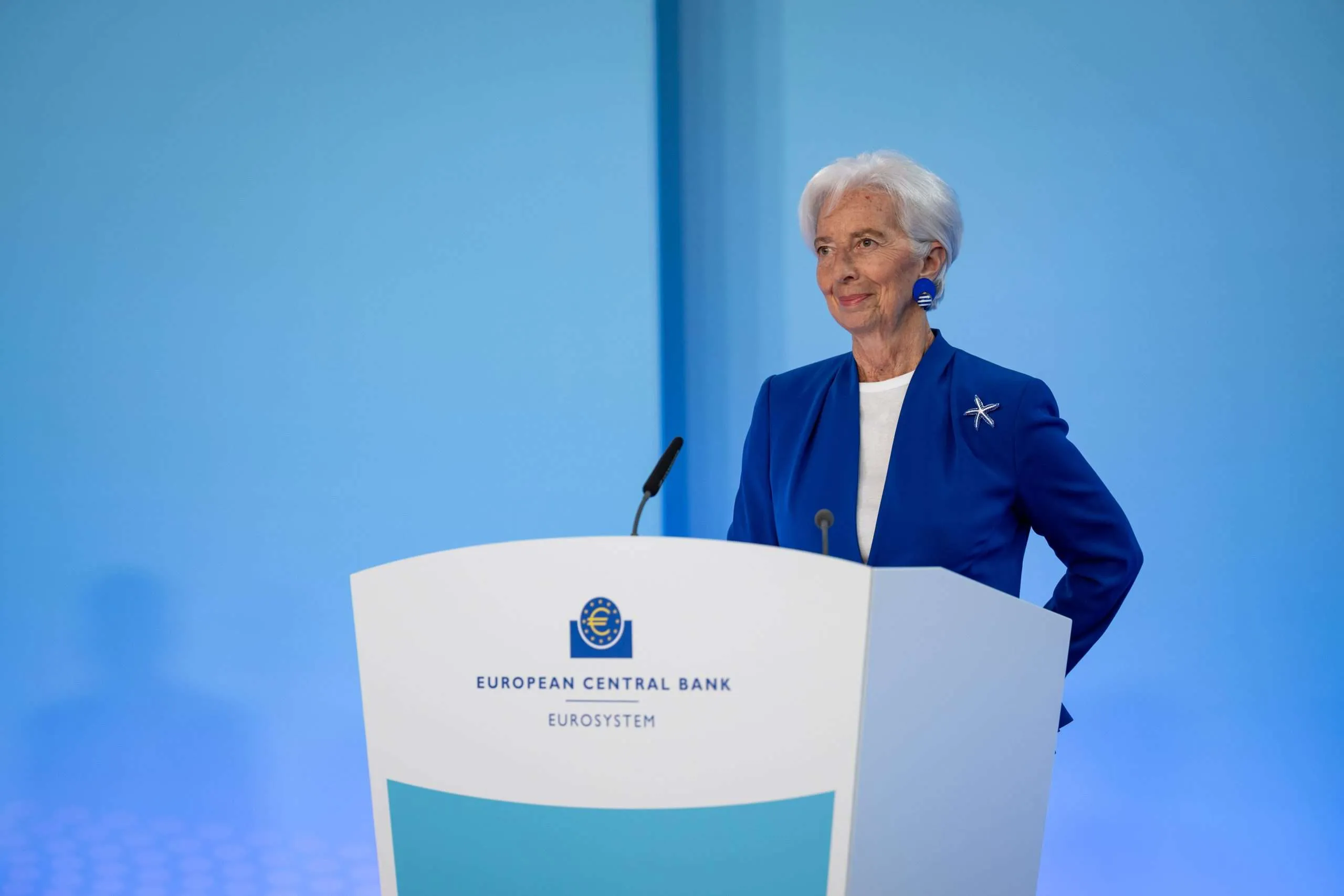
The European Central Bank raised interest rates on Thursday for the first time since 2023, lifting the deposit facility rate by 25 bps to 2.25%, and President Christine Lagarde was quick to defend the move against critics who fear it could deepen the eurozone’s slowdown.
Speaking at the post-meeting press conference in Frankfurt, Lagarde said the decision was robust across three different scenarios the ECB had mapped for how the energy shock might evolve, arguing that the conflict in the Middle East is generating inflation pressures that the central bank cannot afford to ignore.
The hike marks a sharp reversal of the easing cycle that defined the ECB’s approach through much of 2025. Eurozone inflation accelerated to 3.2% in May, its highest reading since September 2023, driven by a near-11% surge in energy prices following disruptions to oil shipments through the Strait of Hormuz. Core inflation has also climbed, reaching 2.5% in May.
No pre-set path
Lagarde declined to commit to a tightening cycle, telling reporters there would be no pre-set path for interest rates and that the Governing Council would remain data-dependent, deciding meeting by meeting. She did, however, push back firmly on the suggestion that Thursday’s move was a one-off “insurance” hike, a comment markets read as leaving the door open to further increases, with some analysts now pencilling in a second hike as early as September.
She also acknowledged the deteriorating growth picture, noting that labour demand has cooled and that business surveys point to a slowdown, particularly in services, as the war weighs on activity.
Forecasts revised
Alongside the decision, the ECB published updated staff projections, revised notably from the March round. Headline inflation is now expected to average 3.0% in 2026 (up from 2.6%) and 2.3% in 2027 (up from 2.0%), returning to the 2% target in 2028. More telling for the policy path, core inflation was lifted to 2.5% for both 2026 and 2027 — a signal that the Governing Council sees the energy shock feeding through to underlying prices rather than washing out. GDP growth forecasts were trimmed to 0.8% for 2026 and 1.2% for 2027.
Market reaction
The euro failed to capitalise on the hawkish tilt. EUR/USD slipped towards 1.1500 in the American session as renewed threats from US President Donald Trump against Iran lifted the US dollar, with the Dollar Index consolidating above the 100.00 mark. With the hike largely priced in ahead of the meeting, the spot reaction said more about geopolitics than policy.
On the rates side, Lagarde’s rejection of the “insurance hike” framing did its work: consensus has coalesced around a second 25bp move before year-end, with September the favoured date, though some desks see July as live if energy prices stay elevated. Traders’ near-term focus now shifts to geopolitical headlines and the oil complex as the dominant drivers for the pair, with incoming inflation prints determining whether the September pricing firms or fades.
The ECB’s next monetary policy meeting is scheduled for July, where markets will be watching closely for any firmer guidance on the pace of tightening.