Recovery in Full Swing: Stocks bid and oil finding acceptance south of US$100 | LeapRate | Online Trading Industry News, Broker Intelligence & Fintech Analysis
Risk assets remained bid on Tuesday, with global equities on the front foot. Back-to-back gains across major US stock benchmarks have seen the Nasdaq 100 pencil in 10 consecutive days of upside – the longest streak since 2021 – while the S&P 500 is now on the doorstep of reaching the all-time high of 7,002. This is notable given the uncertainty surrounding the Middle East conflict and the US-Iran blockade in the Strait of Hormuz.
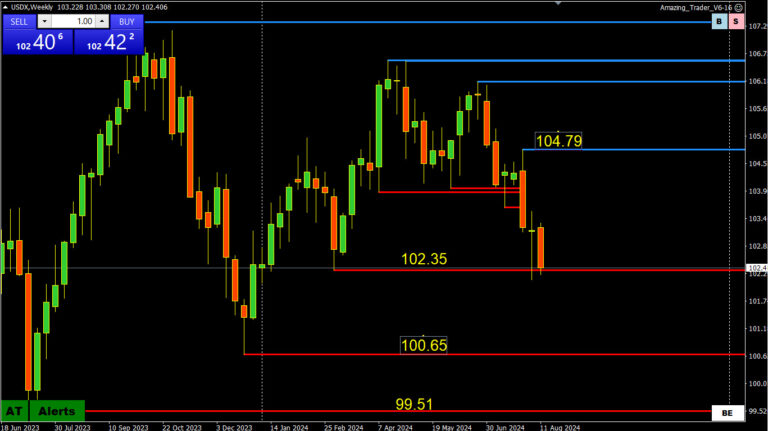
The USD also continued to unwind its haven demand, extending the retreat below its 50- and 200-day SMAs. As expected, higher-beta currencies remained bid, with the AUD and NZD up for a second straight day versus the USD. That said, risk reversals for the AUD are lower, indicating a preference for protective puts rather than calls.
In the commodities complex, while oil continues to trade south of the widely watched US$100/barrel threshold, both Brent and WTI are still markedly higher YTD, up a little more than 55%. For spot gold, another day in the green was bolstered by ongoing USD downside and easing expectations of future Fed rate hikes.
The fixed-income space also saw US Treasuries lifted again, with yields falling across the curve amid optimism that another round of peace talks could be on the table as soon as this week.
Are markets underestimating the downside risks?
Despite the US-Iran blockade in the Strait and limited oil flows through this strategic waterway, most US equity benchmarks are trading above pre-conflict levels.
The US and Iran are gearing up for a second round of peace talks, following last weekend’s failure to reach a resolution. Both sides essentially left empty-handed, with the nuclear programme and sovereignty over the Strait as the key sticking points. From the market’s perspective, sentiment is more optimistic right now. Investors are clearly pricing in a lower probability of long-term disruption, with hopes of a near-term resolution. This remains the trade, with economic data taking a back seat for now.
Markets have gone from oversold to overbought in a short space of time, and investors are essentially trading as if the conflict is already over. Although both the US and Iran do appear to want to end this war, and while extreme tail risks are less likely at this point, the potential for renewed conflict is still a concern.
The International Monetary Fund (IMF) also recently made headlines, warning that the US-Iran conflict could trigger a global recession if the war is prolonged and energy prices remain elevated. The IMF also delivered a grim reading for the UK, with GDP growth downgraded by 0.5 percentage points from 1.3% to 0.8% for this year – the largest downgrade among all G7 nations. It also stated that UK price pressures could increase by up to 4.0% in 2026.
Additional news updates
ECB President Christine Lagarde recently noted that while the Middle East conflict is worse than initially planned for, it is not yet as bad as feared, and that there is no bias towards policy tightening. Despite this, having seen eurozone inflation rise by 2.6% in March at the YY headline level, and while markets have largely priced out a rate hike for this month’s meeting – discounting only 6 bps of tightening – June’s meeting is now fully priced in for a 25 bp increase.
The US March PPI inflation numbers also landed on Tuesday and were much better than feared, coming in at 4.0% for the YY headline print. Although this is still the highest level since 2023, it was well below the 4.7% median forecast and markedly lower than the maximum estimate of 5.9%.
Original Analysis for Leaprate.com by Aaron Hill, Chief Market Analyst at FP Markets