Smarter automation and decision making: How the use of AI will help FX option trading gain further traction electronically



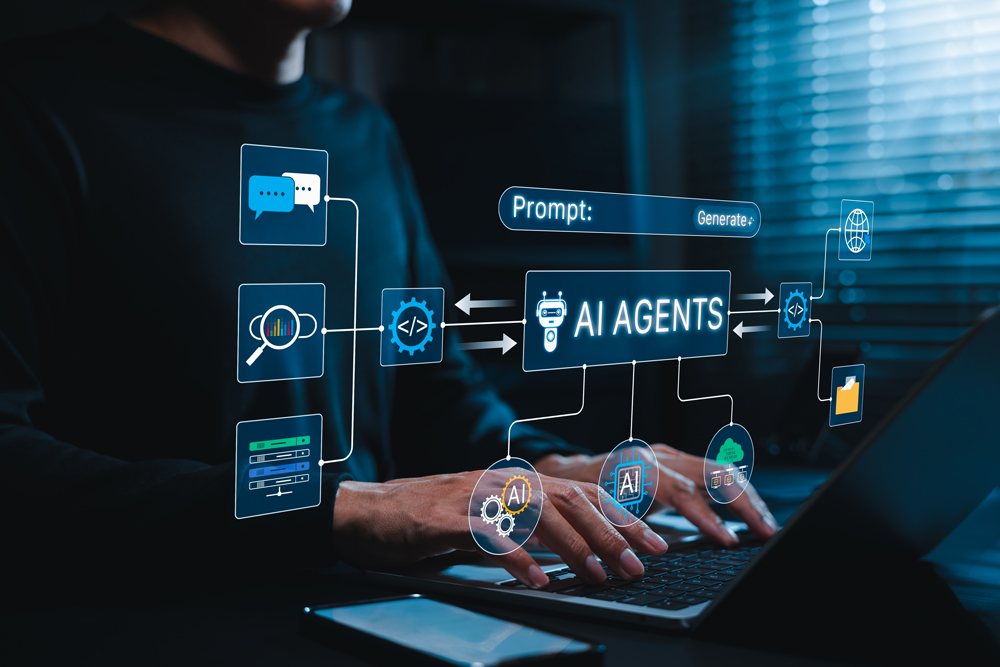




The first and most immediate impact of AI on electronic FX option trading is already evident in model validation and backtesting and as these capabilities mature, enhancements will increasingly span the entire product lifecycle.
That is the view of Bart Joris, head of FX sell-side trading LSEG, who observes that FX options pricing stands to benefit from a reduction in issues within volatility and pricing models, improving accuracy in volatile markets.
“AI acts as a catalyst for expanding both the breadth of data inputs – beyond FX and interest rates – and the speed at which complex volatility models can be computed,” he explains. “What previously required extended computation can now be executed at nearlight speed, enabling new layers of automation across electronic trading workflows.”
Joris says the evolution of AI from basic risk detection to advanced model development is already underway, primarily focused on backtesting and model accuracy.
“As these approaches mature and become deterministic – with appropriate controls to prevent unexplained behavioural changes – they will increasingly be deployed in live production systems,” he adds. “In some cases, this transition has already occurred, with deterministic AI models accepted for use as semantic tools during the build and testing phase or run in parallel to production pricing to surface previously unidentified trader signals.”
“Agent based architectures allow multiple specialised models to collaborate on tasks and converge on coherent outcomes, unlocking new capabilities.”
Bart Joris
Over time, these models are likely to be incorporated directly into core pricing and trading frameworks, subject to broader acceptance across trading, risk, legal and regulatory functions although adoption may take longer for more conservative institutions.
Optimising algos
AI utilising trading data can help to optimise FX algos for better outcomes according to Joris, who notes that one of AI’s key uses is enhancing price and liquidity discovery well beyond traditional, predefined algorithmic boundaries.
“Agent based architectures allow multiple specialised models to collaborate on tasks and converge on coherent outcomes, unlocking new capabilities,” he says.
When we consider how AI advancements are driving more sophisticated automation and predictive capabilities in electronic FX option trading, we first have to acknowledge that the speed of AI development across the entire spectrum of financial markets is stunning.
According to Chris Jackson, CEO & co-founder of OptAxe, we are almost certainly witnessing the fastest period of technology change since the electronification of markets where every part of the workflow is subjected to analysis with an AI lens – including trading.
“But as exciting as that sounds, across institutional trading workflows we also have to respect some embedded fire breaks to this process – some by design and some not,” he says. “For a look at truly autonomous trading workflows, there are some revolutionary things happening in other markets. For example, crypto platforms already allow you to deploy agents that interact directly with someone else’s agent and they will even give you the SDK to help build them.”
Another example can be found in tokenisation where smart contracts embed margining, collateral, settlement, exercise, reporting and clearing into the code itself, automating large parts of what we know today as the trade lifecycle.
“Will some of that head to traditional institutional FX option markets – absolutely,” says Jackson. “But right now, accountability for trading decisions and risk management remains a human job and environments must optimise for that still.”
Automation in FX spot execution is already very mature and algo execution is moving from adaptive to agentic. But in spot FX, automation is largely a solved problem where the competitive edge is about speed and spread compression.
Multi-dimensional liquidity
FX options is fundamentally different because the liquidity problem is multi-dimensional: strike, tenor, structure, counterparty appetite and volatility regime all interact simultaneously. That complexity is exactly where AI adds value that rule-based automation cannot, explains Jackson.
“Successful automation and predictive capabilities are therefore a balance between building for the future while partnering with the existing technology,” he says. ““AI is well suited to this because it can adapt to the specific tech stack each desk has built. Processing large, dynamic data sets, adding non-deterministic models alongside traditional risk metrics, scenario analysis and bringing inference to the live systems provides trading desks enhanced predictive capabilities.”
“Successful automation and predictive capabilities are a balance between building for the future while partnering with the existing technology.”
Chris Jackson
Basic risk detection has historically focused on being a control layer to counterparty, market and operational risk – and certain anomaly identification. These are all areas where participants are testing and deploying new AI tools successfully currently.
Regarding advanced model development, Jackson suggests there is some debate as to whether it will fundamentally change the core quantitative frameworks that underpin pricing. “What could be most impactful, at least initially, will be enhanced models to calibrate surfaces and highlight inconsistent price feeds,” he says.
The other side of this is fine-tuning bespoke pricing for clients; every price should be adjusted based on behaviours, positions and trading environments. Market makers do this intuitively but adapting frameworks to automate the process is a natural evolution.
“The result of this will probably be a hybrid pricing stack, where conventional models drive surface construction and refresh, with AI enhancing calibration and interrogating flow dynamics live at point of trade,” adds Jackson, who goes on to observe that the largest and most sophisticated firms have been utilising trading data help to optimise FX algos for better outcomes for some time.
He adds that if anything, AI democratises the process for the firms that have, until now, been constrained by their ability to use their trading data.
“Trading data may be spread across balance sheets, databases and internal platforms,” he says. “Unifying, cleaning and interpreting this data was difficult. But now, AI tools can look at vast quantities of disparate data and perform exactly this type of analysis – and do it very well.”
“But optimising an algo based on historical data is just one part of the story. Liquidity access, markouts, rejection rates, information leakage and slippage all need real-time inputs and the firms that manage those best are undoubtedly investing in AI to manage multiple factors simultaneously during execution.”
Adaptive workflows
AI is turning static ‘if then’ algos into adaptive, datadriven workflows explains Callum Jefcoate, Managing Director FX Derivatives Product Business Group, at smartTrade.
“Traditional engines already manage vol surfaces, RFQs and delta/gamma hedging, but they operate on fixed thresholds set by traders. AI and machine learning can continuously learn from book data, spreads, volatility regimes and time to expiry and then adjust those thresholds dynamically, so the same workflows become context-aware rather than rigid.”
The predictive angle is equally important. Options desks have always used history and book information to anticipate exercise and hedging needs; AI enables the incorporation of many more features (such as intraday liquidity, event calendars, crossasset signals and client segment behaviour) into forward looking models for execution quality, slippage and expiry risk.
Jefcoate sees AI extending FX options in two directions: more sophisticated risk management and faster model/product innovation.
“On risk, most desks already monitor Greeks and use rules based delta/gamma hedging,” he says. “AI allows hedging to be treated as a dynamic optimisation problem. That goes beyond flagging risk; it helps design and execute hedging policies that better reflect how the book behaves under different scenarios. In the near term, we see agentic capabilities supporting this by analysing outcomes and suggesting refinements to thresholds and parameters that traders can choose to adopt.”
“In the near term, we see agentic capabilities analysing outcomes and suggesting refinements to thresholds and parameters that traders can choose to adopt.”
Callum Jefcoate
On the model side, AI can accelerate creation and onboarding of new structures. With AI assisted tooling and natural language interfaces, quant and development teams can describe desired model variants and have much of the configuration and wiring automated, while still validating methodology.
On liquidity selection, a simple best execution engine just hits the best price, whereas an AI enhanced engine analyses each LP’s historical quoting and fill behaviour, including rejection rates, spread dynamics around events and sensitivity to perceived ‘toxic’ flow. It can then dynamically choose or recycle pools of liquidity to minimise slippage and market impact.
“Better outcomes must matter to both sides,” says Jefcoate. “For clients, AI driven optimisation should mean improved execution quality and more reliable access to liquidity. For the institution, it means more efficient use of liquidity relationships, reduced hedging costs and stronger evidence of best execution.”
Agent deployment
On the question of what role AI will play in helping to generate trading signals, automate hedging and simulate scenarios for faster decisions with FX option trading, Joris says this is precisely where AI agents are being deployed.
“It all starts with the data and how it is broken down to tasks, where the agent calls the data and elevates to curation which can then be used by other agents that take it to the next step in the workflow’s automation,” he adds.
This agentic workflow augments traders’ capabilities, empowering them with speed, quicker exploratory iterations and the ability to combine to create new workflows. Though the basic underlying logic remains, with AI the automation takes less programming skills, allows for wider input ranges and is quicker in execution.
“Not even the end final trading result will be one seamless workflow where the ‘trader’ is the risk manager to control the process,” continues Joris. “FX options are particularly well suited to this evolution, given its strong foundation in automated modelling, which AI further accelerates through adaptive learning models.”
AI is already extensively applied in FX options trading to enhance pre- and post-trade analysis as it is less intrusive while providing probability based insights into potential future outcomes. By enabling AI models to access wider datasets, traders benefit from more robust predictive and correlation frameworks.
“While historical data does not guarantee future performance, AI is highly effective at rapidly identifying anomalies, adjusting in real time when correlations break down and detecting regime shifts,” says Joris. “This supports faster trader reactions and stronger controls to prevent runaway algorithms, while also improving data accuracy through accelerated curve fitting for both pretrade forecasting and posttrade outlier detection.”
In FX options, all trading decisions are genuinely multi-dimensional with traders making choices about Greeks, timing, instrument selection, available liquidity and market impact simultaneously. AI will not replace that judgement, but it can compress the decision cycle dramatically acknowledges Jackson.
“If you take all the considerations that you need to simulate a scenario or to generate a trading signal, such as large data analysis, pattern recognition, historical client behaviour, positioning and trader intent, they are all going to get easier with AI tools,” he says.
“But as you have probably seen when you use AI for your day-to-day, they are outcome-based and non-deterministic, which can also create problems. Market narratives will ebb and flow and then flip on an instant (or a Trump comment). Traders are still very good at dynamically weighting different factors based on those changing narratives and so coding that into the LLMs is still somewhat of a challenge.”
Accessible analysis
Jackson refers to the use of AI in FX options trading to enhance pre- and post-trade analysis as probably the clearest current use case and also the area where the bar is lowest. Pre-trade, AI can assess likely liquidity conditions, expected dealer responsiveness, the best route to market and the probability of achieving a good outcome for a specific structure as well as benchmarking where pricing should sit before the trade is sent.
Post-trade, it can deliver genuinely granular execution analysis looking at quote quality, timing, venue performance, dealer performance, slippage and transaction cost patterns across different market conditions.
“AI makes that analysis more rigorous, more timely and again, more democratic,” says Jackson. “Once you have access to that data set, AI can unlock a lot of the analysis.”
AI also has a significant role to play in helping FX option trading firms to remain compliant with regulatory requirements. It is very good at helping firms identify unusual patterns, potential conduct issues, market abuse indicators, control breaches, or workflow exceptions far more effectively than traditional rules-based surveillance, which is valuable for front office supervision and for second line compliance functions.
But Jackson cautions that governance is the critical point. “In regulated institutional markets, AI used for compliance is one step in the process,” he adds. “It has to be explainable and auditable with clear escalation processes.”
On signals, Jefcoate observes that AI can mine multi-asset data to relate changes in implied vols and skews to cross-asset moves, recurring events and client flow patterns.
“For trading scenarios, expiry and pin risk are key use cases,” he says. “Deterministic tools already adjust positions as spot moves, but AI can simulate many plausible spot paths before expiry and evaluate P&L for different hedging strategies.”
For scenario simulation, Jefcoate envisages a trader asking Agentic Copilot for ‘the key scenarios for my book around Thursday’s rate decision’ and receiving a concise set of P&L impacts and explanations.
“In pretrade, AI can turn analytics into tailored recommendations, which is particularly valuable for institutions whose sales teams currently ‘don’t do options’. The key point is that in future, smartTrade Agentic Copilot (STAC) assists rather than replaces; salespeople remain responsible for what they show clients but they are better equipped and better informed.”
Posttrade, AI can learn from realised performance. Using existing Greeks, stress and P&L data, models can identify which structures have historically delivered good hedge effectiveness for particular client types and which have underperformed.
Dual role
AI plays a dual role in trading and compliance with the same analytical techniques used in pre and posttrade analysis increasingly applied to surveillance and control functions.
Joris explains that AI enables broader pattern recognition and more accurate responses, improving the effectiveness of compliance surveillance while reducing false positives. Understanding the behavioural context of trading activity is significantly more powerful than relying solely on static mathematical thresholds, strengthening both oversight and auditability.
“AI also significantly broadens idea generation and structuring capabilities, expanding both the range of potential products and reducing timetomarket for new electronic FX options offerings,” he adds, observing that generative AI is already present in pricing and execution workflows as assistive tooling.
“For example, it acts as an alerting mechanism or kill switch triggered by pattern changes, events or abnormal volatility, though typically not in a deterministic way that directly influences pricing or execution,” says Joris. “The primary constraint remains validation, governance and auditability; until these controls mature, broad adoption of selflearning behaviour in production will remain limited.”
According to Jackson, one of the biggest opportunities lies in reducing the friction between how traders think and what systems require.
“In FX options, traders think and communicate in strategy-based, relatively natural terms,” he explains. “Systems historically require rigid, field-by-field inputs and that gap has been a barrier to electronic adoption in this product for years.”
AI can bridge this gap. Natural language trade capture. Automated structuring of complex strategies from a conversational description. Smarter RFQ construction. Intelligent dealer targeting. Dynamic workflows that adapt to market state. Multi-leg trading that is actually intuitive electronically, rather than a painful exercise in form-filling.
“That is exactly the problem we are working on – how to make a sophisticated institutional product more accessible electronically,” says Jackson. “AI is a big part of that answer, because it allows you to preserve the complexity of the product while simplifying the experience of trading it.”
Game-changing technology
When asked whether we will see greater use of generative AI, machine learning and real-time analytics to enhance pricing, execution and risk management in FX options trading over the next few years – and which types of market participants are likely to benefit most from this – he observes that the tools available now can be game-changing to smaller teams that were resource constrained to undertake large data projects.
“But we also see one trend continuing and that is one of specialisation,” says Jackson. “More than ever, trading teams will focus on any edge they may have and try and inflate that using AI. That may be currency based, or product based or client based or strategy based but it could also be model-based for the advanced quantitative firms.”
Specialised teams that have the raw data that others don’t are in a strong position to fine-tune risk management, analysing liquidity, predicting flows and calibrating pricing. Rather than invest their AI budgets broadly across their entire network, they are focusing on monetising what they are good at.
Jackson reckons that we will all have token budgets soon and that it makes sense that those tokens are deployed in areas where a sell-side institution genuinely wants to compete.
“The flip side of that of course is that the buy-side will be more discerning on who they deal with on certain currencies and products,” he says. “Their AI tools will tell them, in real time, who to ask for prices whilst reducing their signalling. In a huge, fragmented derivatives market like OTC FX derivatives, it’s just not possible for humans to uncover offsets or axes efficiently and systematically.”
Looking ahead, Jefcoate reckons AI will unlock new functionality around product construction, user interaction and risk orchestration.
“On construction, AI-assisted tooling can help quant and development teams specify, configure and integrate new option variations – for example, TARFs with pivots or barriers – much faster by turning natural language descriptions into model variants wired into existing pricing libraries and cashflow engines,” he says.
For interaction, generative AI lets traders and salespeople access complex workflows conversationally. The intent with the smartTrade Agentic Copilot is to add more multi-step, agent like behaviours but still under explicit user control, using API-driven and governed connectors.
“In risk, AI agents can ultimately help monitor books for complex cross currency relationships such as correlated expiries across several pairs and suggest or execute hedges that exploit triangulation, rather than treating each pair in isolation,” adds Jefcoate.
Broader application
In the longer term he expects broader use of generative AI, machine learning and realtime analytics in FX options as more flow becomes electronic and more high quality data is captured. In pricing, these tools will refine volatility surfaces and skew using richer inputs on top of existing curve and volmanagement capabilities, while in execution they will drive smarter liquidity selection, algo tuning and pretrade analysis.
“Risk management will increasingly feature agent like AI, especially on systematic desks, with digital assistants specialising in tasks such as expiry management, gamma optimisation, scenario selection and crosscurrency consolidation,” says Jefcoate.
Large dealers should benefit from better capital and risk efficiency and more intelligent electronic pricing and execution while regional banks and smaller firms can access capabilities that once required large quant teams, safely expanding into options with strong guardrails and documentation. “Ultimately, we think the biggest winners will be those pairing robust, transparent electronic infrastructure with carefully governed AI – starting with natural language copilots and evolving towards more agentic behaviour as comfort and regulation allow,” adds Jefcoate.
“AI tends to work better using robust data and it can be difficult to capture all necessary data elements when manually executing and processing trades.”
Stephen Bruel
Stephen Bruel, head of the derivatives and FX practice on the market structure and technology team at Coalition Greenwich and author of a recent report on drivers of derivatives market change observes that FX options still contain manual elements, both at trade execution and post-trade processing.
“AI tends to work better using robust data and it can be difficult to capture all necessary data elements when manually executing and processing trades,” he concludes. “That said, the industry is eager to see how AI can be incorporated into different parts of the flow, such as TCA and pre-trade decision making. As FX options become more electronic, AI tools should improve as well.”
Source link