What Is Treehouse Protocol and TREE Token? Why is it up over 80% Today? | BitcoinChaser
August 28, 2025
Treehouse is a DeFi protocol with it’s companion token TREE. The coin was recently listed on Binace on July 29th, 2025, and in the Early hours today on South Koreas trading platform Upbit.
The token price has exploded from $0.31 to over $0.57, with over USD 2 million worth of tokens traded earlier today.
In this article we will explain in simple terms what the Treehouse protocol is as well as the utility of the Tree token.
What Is Treehouse Protocol?
Treehouse Protocol is a decentralized platform designed to bring stable, predictable returns to the world of cryptocurrency. Much like the way bonds or treasury notes do so in TraFi (traditional finance).
It aims to solve the problem of different interest rates across DeFi platforms, where yields for the same asset can vary wildly.
Treehouse introduces two core innovations to create a “fixed income layer” for crypto:
- tAssets: These are liquid staking tokens that users receive when they deposit Ethereum (ETH) or other liquid staking tokens (LSTs) into the protocol.
- Decentralized Offered Rates (DOR): A system that creates clear, trustworthy interest rates for DeFi, starting with the Treehouse Ethereum Staking Rate (TESR), to help users know what returns to expect.
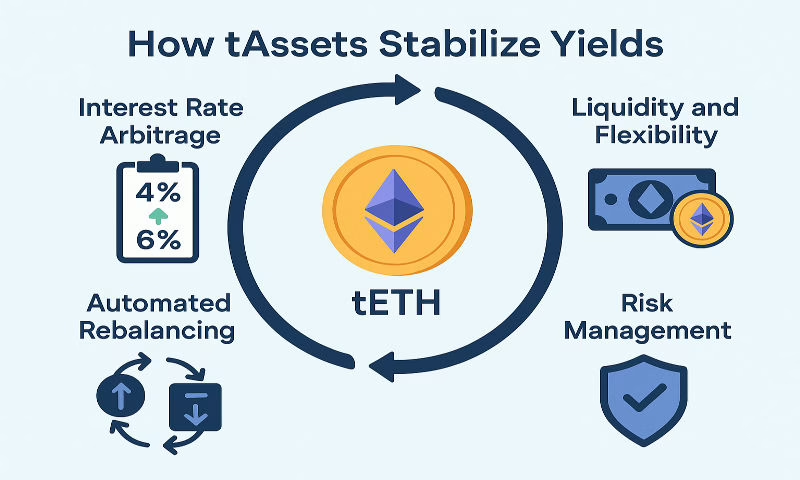
How tAssets Stabilize Yields
tAssets, like tETH, are designed to deliver more consistent and optimized returns compared to standard DeFi staking or lending. Here’s how they stabilize yields in simple terms:
- Interest Rate Arbitrage: When you deposit ETH into Treehouse, you receive tETH, a token that represents your stake. Treehouse’s smart contracts automatically scan multiple DeFi protocols to find the highest available yields for ETH or ETH based assets. If one protocol offers 4% and another offers 6%, Treehouse allocates your assets to capture the best rate, exploiting the difference (arbitrage). This ensures tETH holders consistently get the highest possible yield without manually switching platforms.
- Automated Rebalancing: Yields in DeFi fluctuate due to market conditions, like changes in borrowing demand or liquidity. Treehouse’s algorithms continuously monitor these shifts and rebalance tAssets across protocols to maintain optimal returns. For example, if a protocol’s yield drops from 5% to 3%, Treehouse moves your tETH’s underlying assets to a better performing DeFi protocol, smoothing out volatility in your returns.
- Liquidity and Flexibility: Unlike traditional staking, where assets might be locked, tAssets are liquid, meaning you can trade or transfer tETH while still earning yields. This reduces the risk of missing out on better opportunities elsewhere, as Treehouse handles the optimization in the background.
- Risk Management: Treehouse partners with audited protocols and uses secure smart contracts (audited by firms like Trail of Bits) to minimize risks like hacks or platform failures. By diversifying across trusted DeFi platforms, tAssets reduce exposure to any single protocol’s volatility, stabilizing your returns.
What Are Decentralized Offered Rates (DOR)?
Decentralized Offered Rates (DOR) is a system that creates clear, reliable interest rates for DeFi, making it easier to trust what you’ll earn or pay when staking, lending, or borrowing.
- What It Does: In traditional finance, rates like LIBOR (London interbank offered rate) tell banks what interest to charge for loans. DOR does this for DeFi, starting with the Treehouse Ethereum Staking Rate (TESR), which shows the average return for staking ETH across major platforms.
- How It Works: A group of experts, called DOR Panelists, submit their estimates of current DeFi rates. Treehouse combines these into a single, fair rate using a consensus process, so it’s not manipulated by one person. This rate is public and updated regularly on the blockchain.
- Why It’s Useful: DOR helps you know what to expect when you stake or lend crypto. For example, if TESR says ETH staking yields 5%, you can trust that number to plan your investments. It also helps smart contracts set consistent rates for loans or other DeFi products.
- TREE’s Role: To use DOR data, users pay small fees in TREE tokens, some of which are burned, reducing supply. This makes DOR a key driver of TREE’s value.
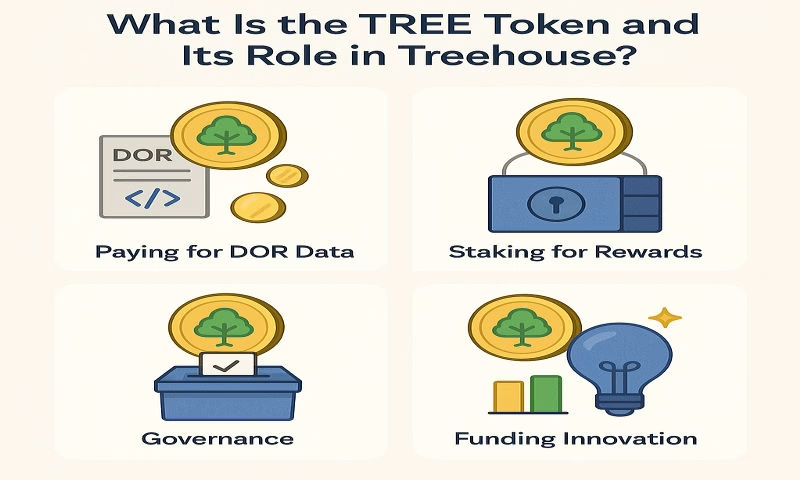
What Is the TREE Token and Its Role in Treehouse?
The TREE token is the native utility and governance token of the Treehouse Protocol, built on the Ethereum blockchain as an ERC-20 token. With a total supply capped at 1 billion tokens, it plays a central role in powering and governing the ecosystem. Here’s how TREE integrates with Treehouse:
- Paying for DOR Data: Smart contracts or businesses accessing Treehouse’s DOR benchmark rates pay small fees in TREE tokens, generating revenue for the protocol and ensuring fair use of its data infrastructure.
- Staking for Rewards: Users can stake TREE in Pre Deposit Vaults to back DOR Panelists, experts who submit interest rate forecasts for benchmarks like TESR. Stakers earn 50–75% APR based on panelist accuracy.
- Governance: TREE holders can vote on key protocol decisions, such as adjusting parameters, upgrading systems, or allocating funds for new products.
- Funding Innovation: The Treehouse Decentralized Autonomous Organization (DAO) uses TREE tokens to fund grants for partnerships, developer tools, and ecosystem growth, fostering innovation.
- Incentives and Airdrops:Treehouse distributes TREE as rewards to panelists and delegators based on rate accuracy, and it airdropped 10% of the supply to early adopters through the GoNuts Season 1 program..
By staking or holding TREE, users contribute to the protocol’s security and earn rewards, while token burns reduce circulating supply, potentially increasing value over time.
Why Has TREE’s Price Surged Today?
1. Upbit Listing Fuels Demand
The primary catalyst is TREE’s listing on Upbit, South Korea’s largest crypto exchange, with trading pairs in KRW, BTC, and USDT.
Major exchange listings boost visibility, liquidity, and investor confidence, particularly in high volume markets like South Korea.
2. Strong Community Hype
The crypto market thrives on sentiment, and TREE’s listing has sparked a wave of excitement.
3. Treehouse’s Growing Adoption
Treehouse’s ecosystem is gaining traction, with over $610 million in TVL and innovations like tAssets and DOR attracting retail and institutional users.
The protocol’s focus on stable yields through arbitrage and transparent rate setting aligns with 2025’s trend of professionalizing DeFi.
Final Thoughts
Treehouse Protocol is redefining DeFi by offering stable, predictable returns through tAssets and DOR, while the TREE token powers its ecosystem with utility and governance.
Today’s price surge, driven by the Upbit listing and growing community hype, underscores TREE’s potential as a standout altcoin.
While the crypto market remains unpredictable, Treehouse’s innovative approach and TREE’s integral role make it a project to watch for traders and investors alike.
Source link